- Hotels
- Rent-A-Car
- Routs
Easter Beyond Eggs and Bunnies
In Christianity, Easter or Resurrection Sunday is a religious festival and a holiday that celebrates the resurrection of Jesus that occurred on the third day after his crucifixion on Calvary, according to the New Testament account. It is the main celebration of the Christian liturgical year and also the oldest and most important Christian festival.
Holy Week
Easter does not have a fixed date. It always occurs between March 22 and April 25. Holy Thursday is the Thursday preceding the celebration of the death and resurrection of Jesus.
Holy Thursday is notable for being the day on which the Mass of the Lord's Supper is celebrated, which commemorates in a special way the Last Supper.
Holy Oils
One of the liturgical ceremonies of Holy Thursday is the blessing of the holy oils used throughout the year by parishes. Three oils are blessed during this celebration: the oil of Chrism, the oil of Catechumens and the oil of the Sick. It is attended by bishops and priests from all over the diocese. It is a time to reaffirm the commitment to serve Jesus Christ.
Washing of the Feet
The washing of the feet is a liturgical ritual performed during the celebration of Holy Thursday, when the Lord's Last Supper is remembered. By washing the feet of his disciples, Jesus demonstrated love for each one and showed everyone that humility and service are the center of his message; therefore, this celebration is the greatest explanation for Jesus' great gesture, which is the Eucharist.
The rite of washing the feet is not a performance within the Mass, but a liturgical gesture that repeats the same gesture of Jesus. The bishop or priest who washes the feet of some people in the community is imitating Jesus in the gesture, not as a play, but as a commitment to be at the service of the community, so that everyone may have salvation.
Institution of the Eucharist
With the “Mass of the Lord’s Supper” celebrated in the afternoon or evening of Holy Thursday, the Church begins the so-called Easter Triduum and commemorates the Last Supper, when Jesus, on the night he was betrayed, offered his Body and Blood to the Father under the appearances of bread and wine, and gave them to the apostles to take, ordering them to be offered to their successors as well.
Good Friday
This is the day on which the Church commemorates the death of Jesus Christ. It is the only day on which Mass is not celebrated and there is no consecration of the hosts. Christians maintain “inner silence” combined with fasting and abstinence from meat.
Holy Saturday
Holy Saturday is, in Holy Week, the first day after the crucifixion and death of Jesus. On Saturday, the Easter Vigil is celebrated for the prayers of the faithful.
Sunday of the Resurrection


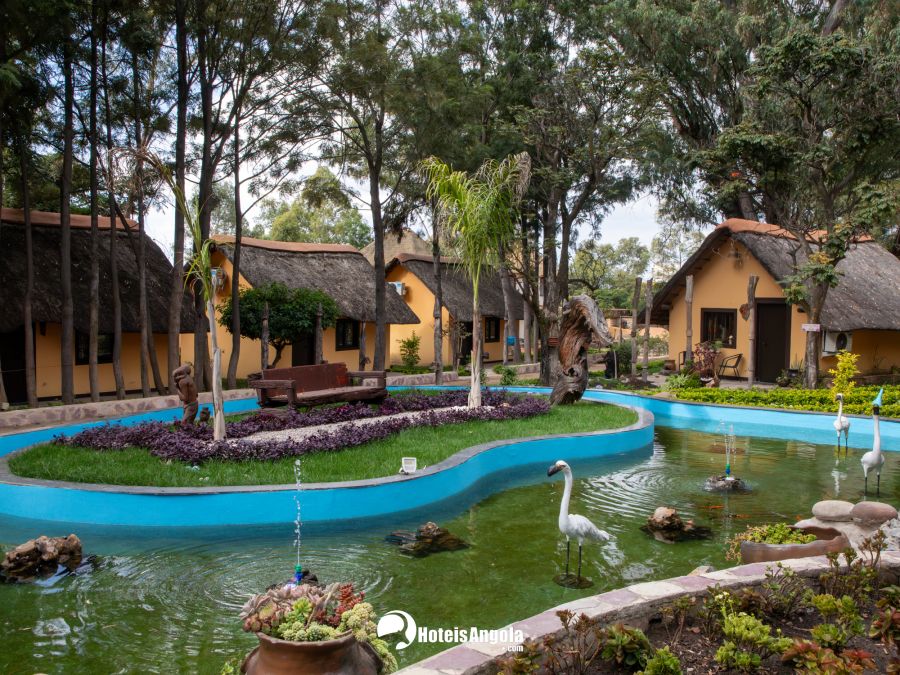

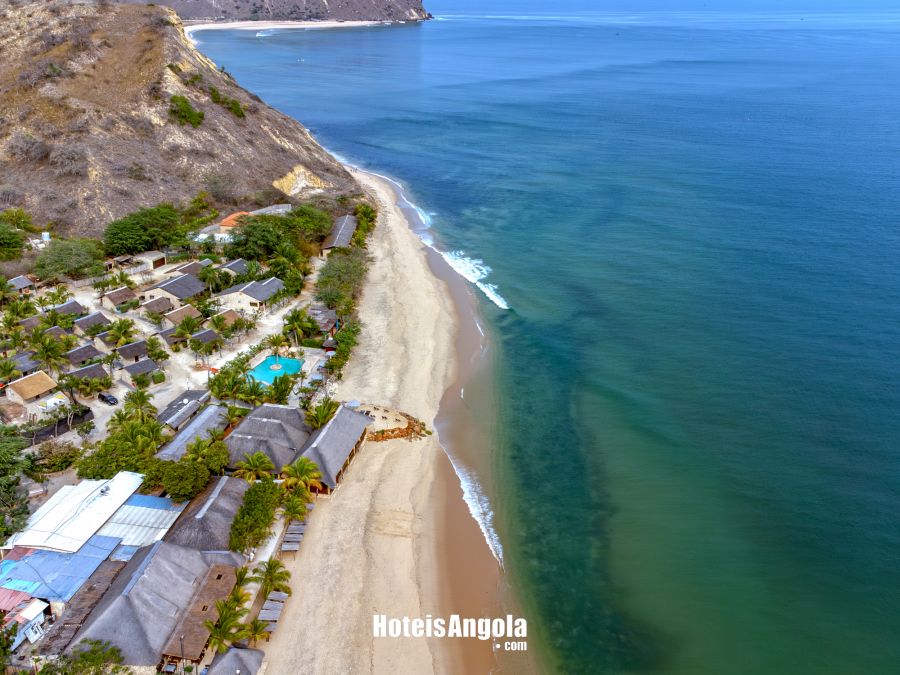
Complexo Túristico Doce Mar






Church of Our Lady of Remedies: located in the old lower city of Luanda, it was an initiative of local merchants and residents to compete with the religious buildings in the upper city.
Our Lady of the Conception of Muxima: Also known as Our Lady of Muxima or Mamã Muxima, it is a Marian devotion from Angola.
Church of Our Lady of Pópulo: Possibly the first stone and lime building in the city, it is the only one of its kind in all of Southern Africa. According to the annals of history, it was here that Europeans were buried until 1838, when the city cemetery was opened. It was founded in the mid-17th century and is classified as a National Historic Monument.
Church of the Cathedral of Benguela: On October 13, 1947, the figure of Our Lady of Fátima walked through the streets of Benguela. She made her pilgrimage with the intention of gathering new believers and bringing peace to those who already were. Excited, the prelate D. Manuel Junqueira and the governor at the time, Commander Zanati, swore by their feet (by God and all the saints) that they would build a large church dedicated to Our Lady of the Little Shepherds.
Catedral Do Sumbe De Nossa Senhora Da Conceição: Designed in 1966 by Francisco Castro Rodrigues, with stability calculations by the engineer Resende de Oliveira, it stands on a plateau facing the sea, in Novo Redondo/Sumbe.
Archdiocese of Lubango: Erected as the Diocese of Sá da Bandeira in 1939, by dismemberment of the Diocese of Nova Lisboa, it was a suffragan of the Archdiocese of Luanda. Its current archbishop is Dom Gabriel Mbilingi, C.S.Sp. Its See is the Cathedral of São José.
Catholic Mission of Caconda (Immaculate Heart of Mary): Founded in 1889 by Father Ernesto Leconth, of French nationality, 20th century.
It was elevated to the category of cultural heritage on April 15, 2014, classified by executive decree, issued by Her Excellency the Minister of Culture, Rosa Silva.
Church of the Catholic Mission of Kuando: Monsignor Keiling describes a series of incidents regarding the Huambo Mission, initially installed next to the place where the civil administration would later be built, on Norton de Matos Avenue, and shortly afterwards, in 1910, next to the Quando River.
Church of Santo Adrião: The Parish Church of Santo Adrião de Moçâmedes began to be built on July 27, 1849, by Provincial Instructions, of March 30 of that year, issued by Governor General Acácio Adrião da Silveira Pinto, tasking Major Ferreira Horta with "building a temple of sufficient dimensions to house "not only all the inhabitants of the colony, but also the neighboring indigenous people, who came to the town to attend religious acts, or who were there on holy days".
Capela Nossa Senhora do Monte: The Chapel of Nossa Senhora do Monte is, along with the Statue of Christ the King, the great exile of the city of Lubango. Located on one of the peaks of the Serra da Chela, the Chapel of Nossa Senhora do Monte is, in addition to a sanctuary of religious pilgrimage that is of great symbolism and importance for the Catholic community, also an important tourist and historical asset.
+ Info news article
-
 The Huíla Tourist Map project was presented on September 15th, in the Huíla Provincial Government Auditorium, in a session dedicated to sharing the work developed and collecting contributions for i...
 -
 Hotels bear commissions on funds allocated to the State, while tourists are forced to look for cash, facing discomfort and possible security risks.
 -
 O turismo angolano encontra-se num momento decisivo. Nos últimos anos foram alcançados alguns progressos, mas continuam a existir desafios estruturais que condicionam a competitividade do sector e ...
 -
 A entrada em vigor da Contribuição Especial para o Turismo, correspondente a 5% sobre as estadias de turistas internacionais, continua a levantar inúmeras dúvidas entre hotéis, aparthotéis, pousada...
 -
 The project aims to provide visitors with essential information about the territory's main attractions.