- Hotels
- Rent-A-Car
- Routs
Umbi hippos

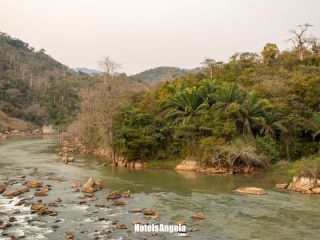
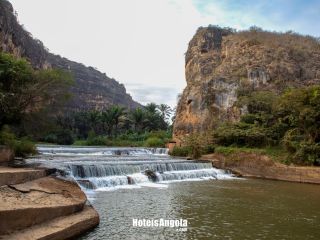
Upon entering a dirt road, towards Fazenda 16, it soon showed us that it would be a small adventure, as as the kilometers passed, the regular dirt road gave rise to a patch of very fine dust and small ditches.
We traveled 45 km from our departure from Waku Kungo and stopped at the closest village to Hipopotamos. As expected, we went to ask the local Soba for permission to visit these imposing animals.
Accompanied by an older man recommended by Soba, we continued our journey towards the indicated place.
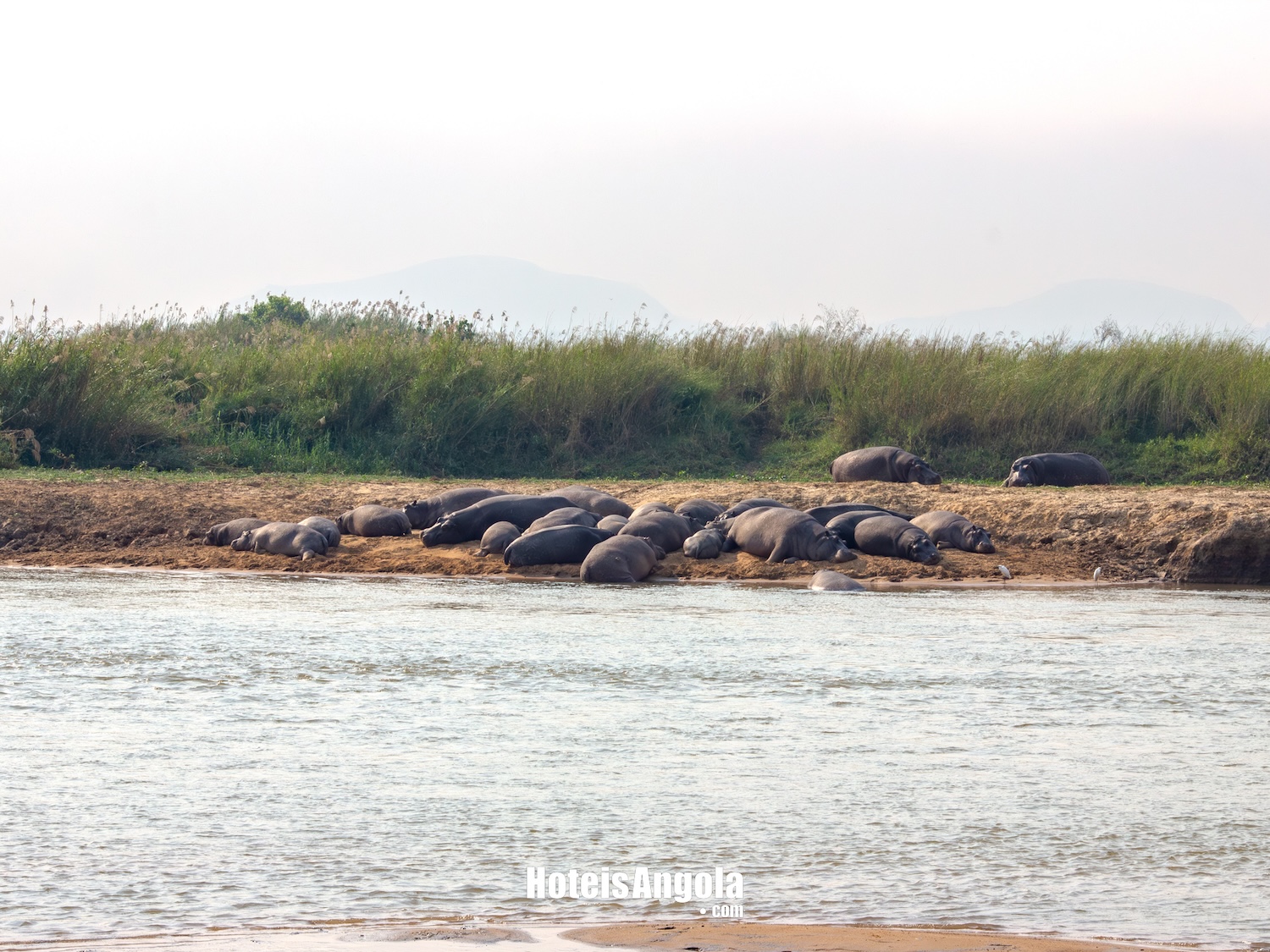
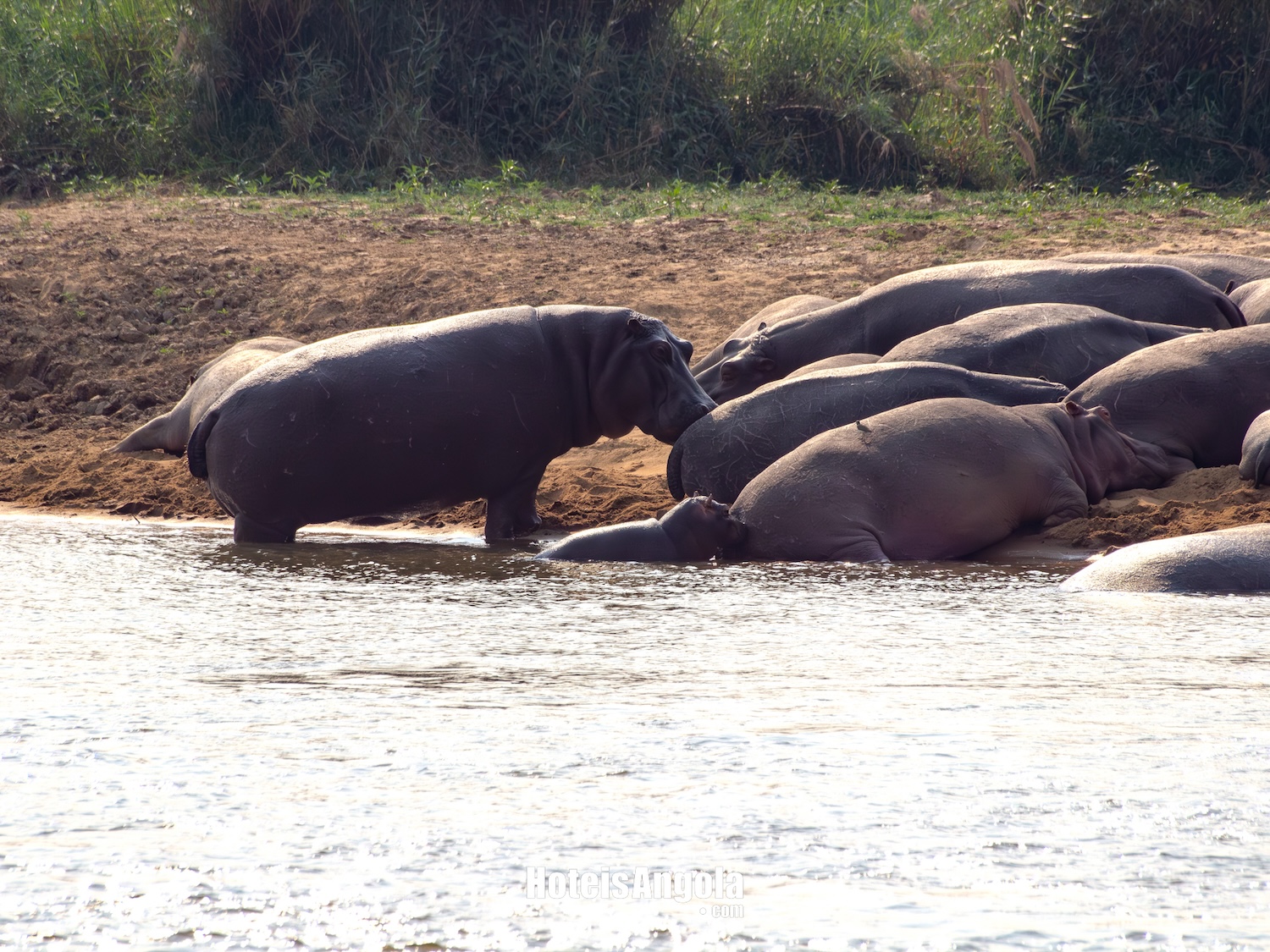
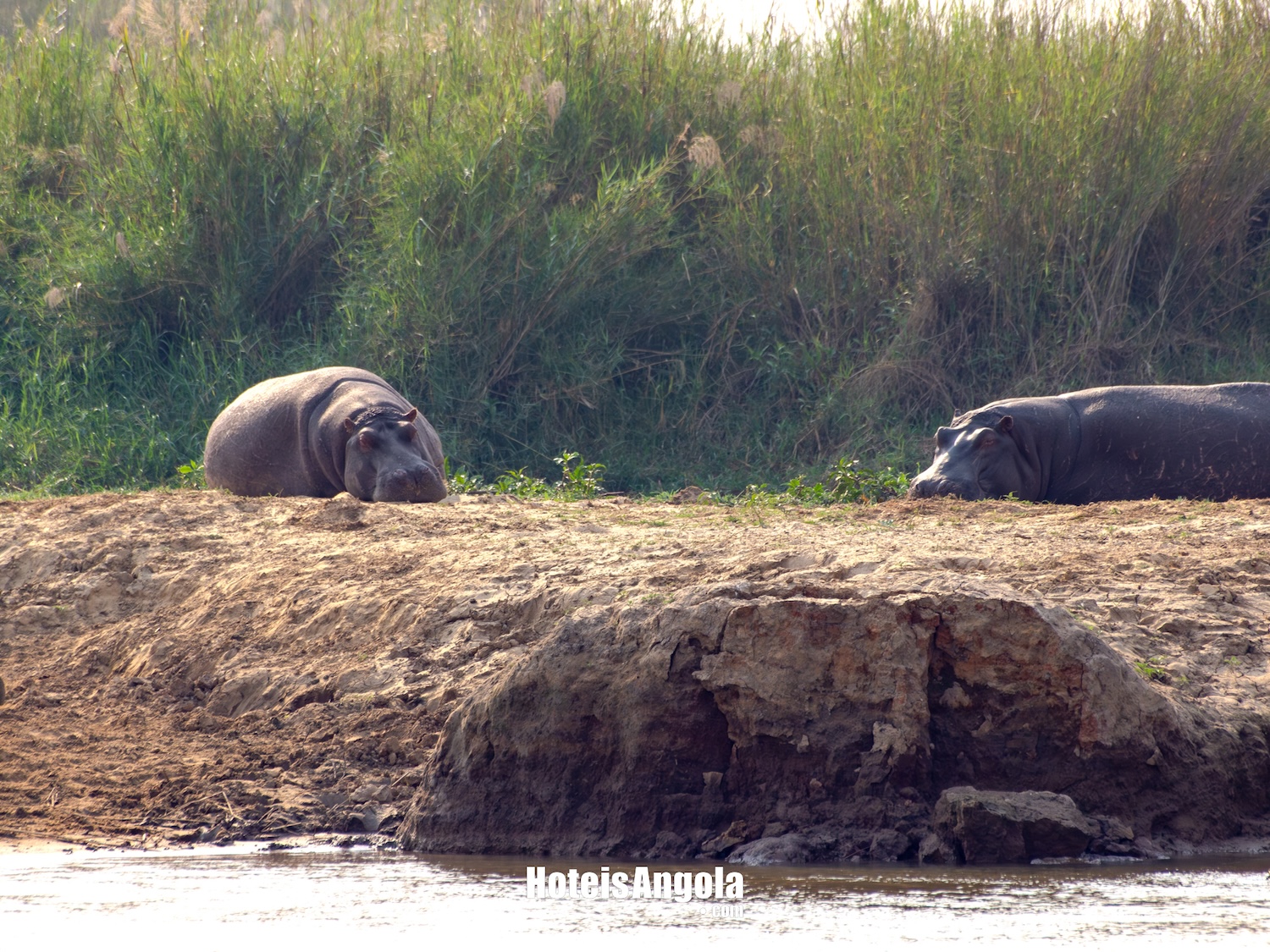
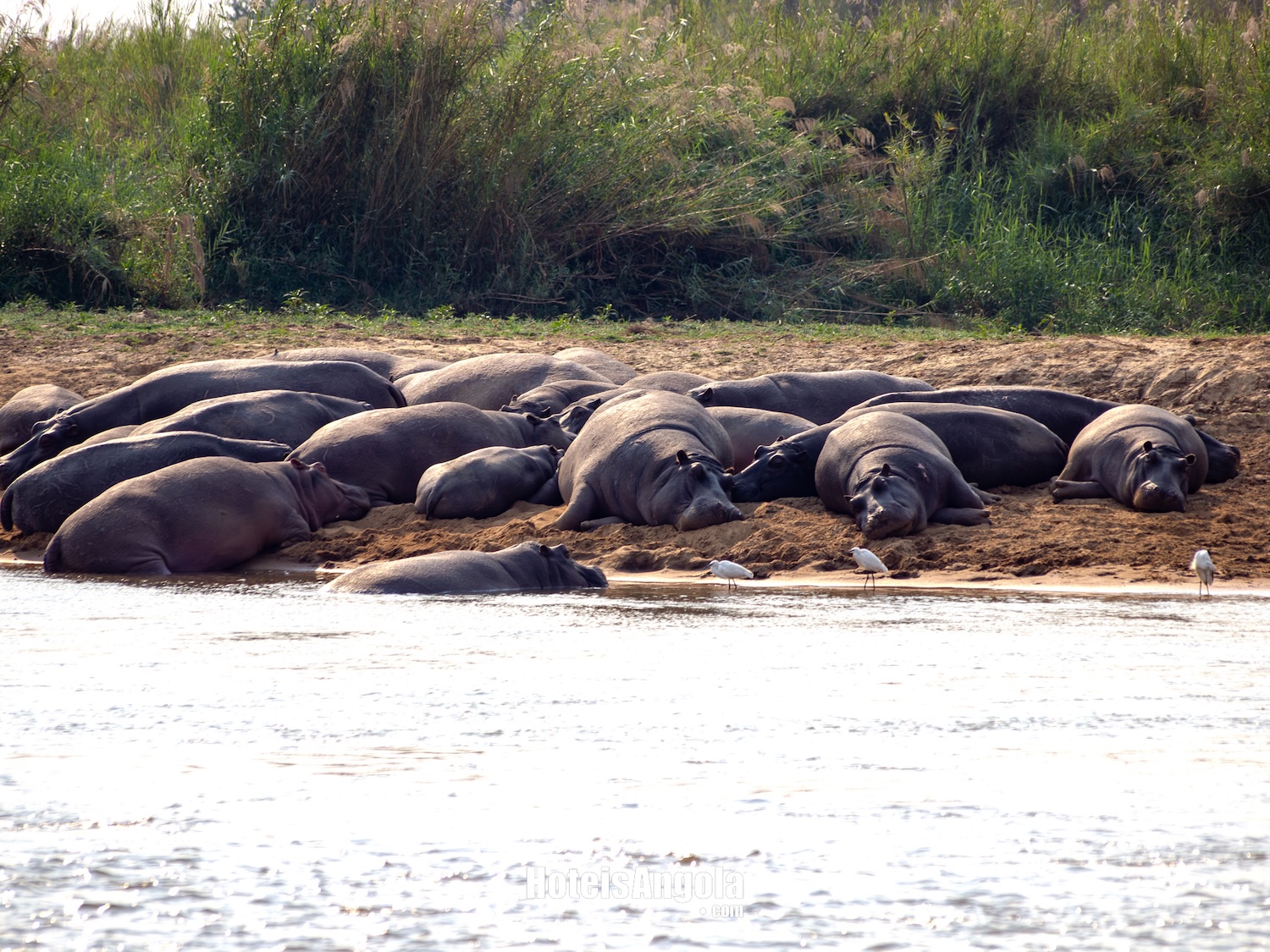
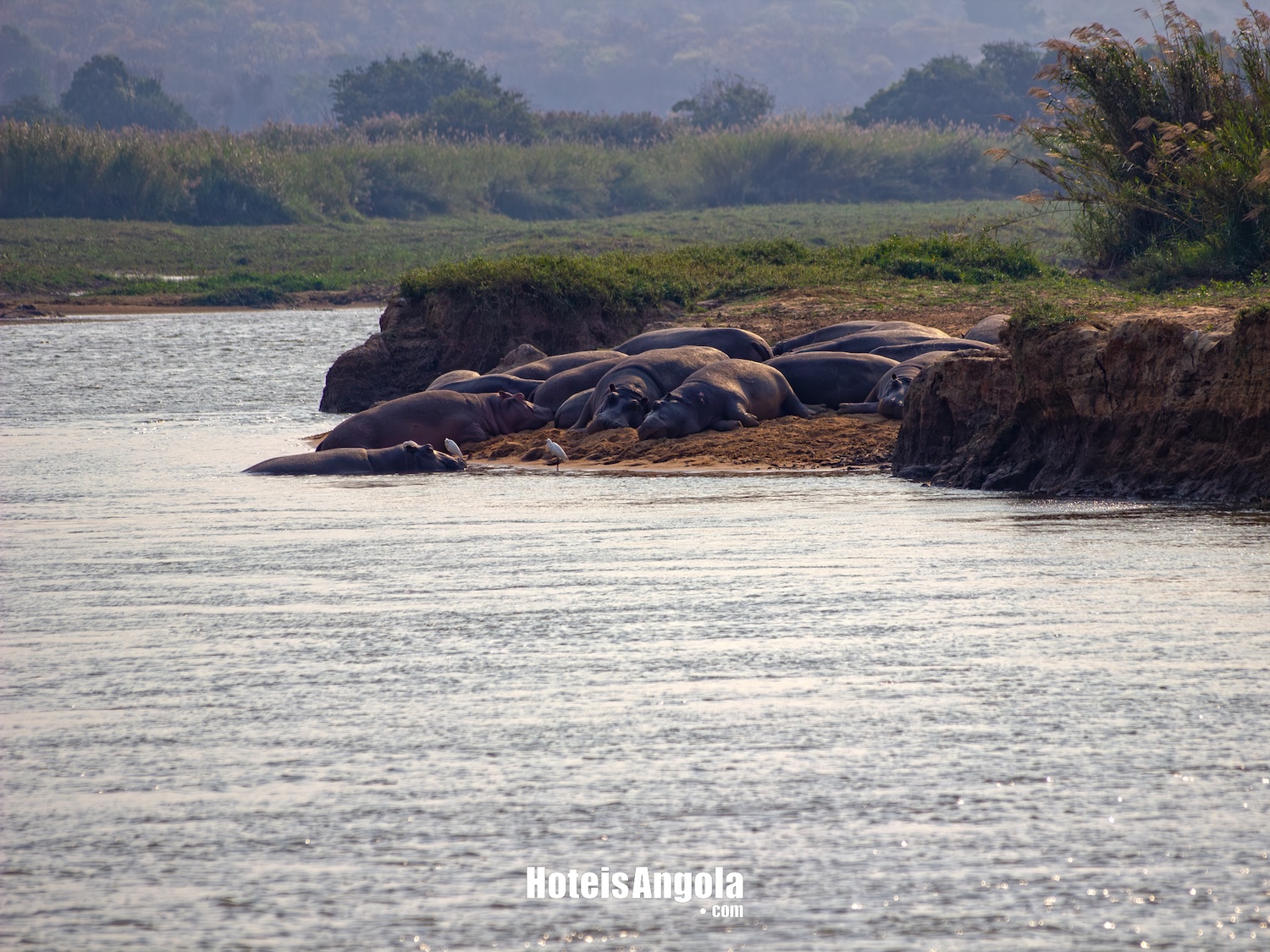
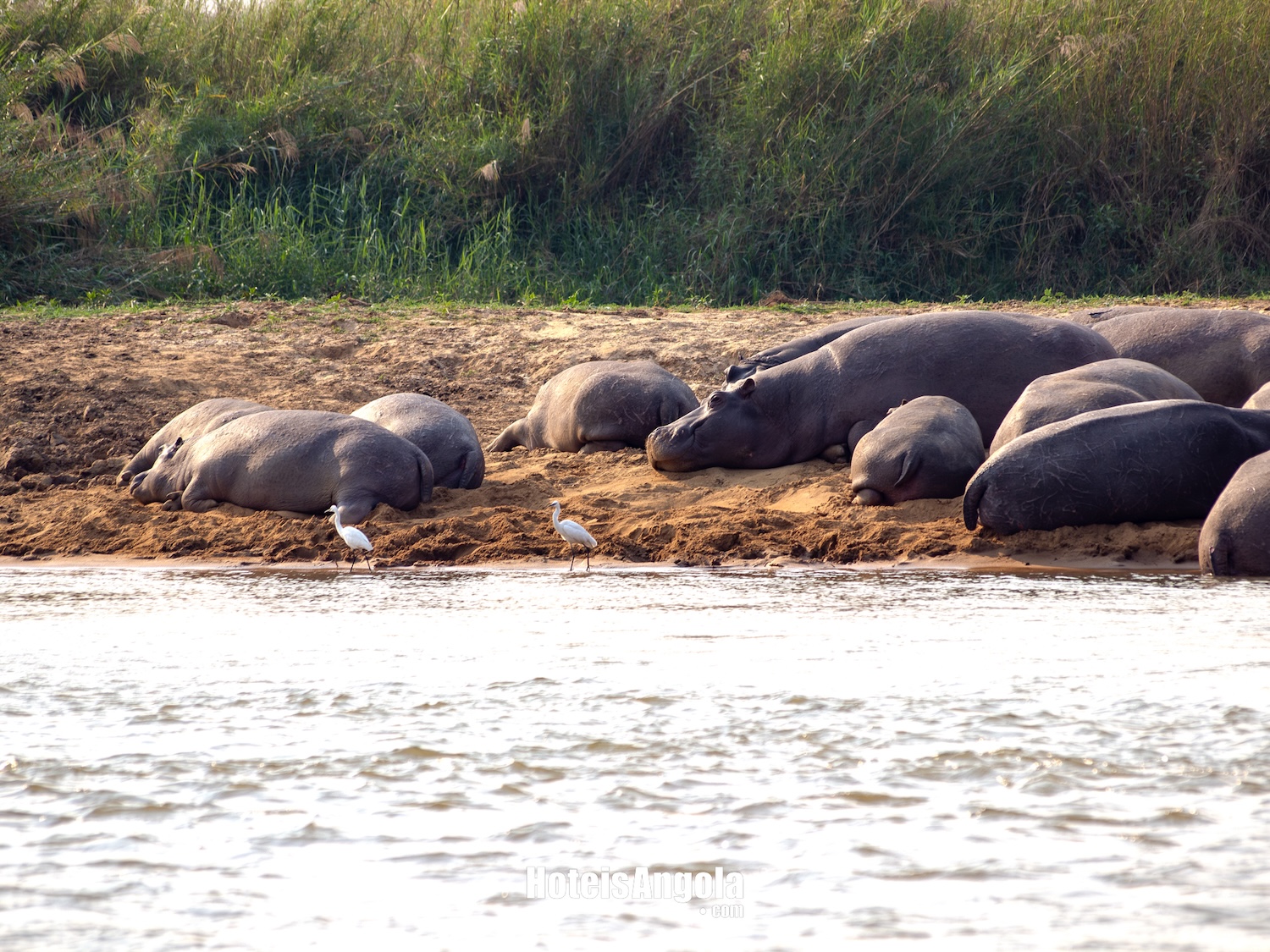
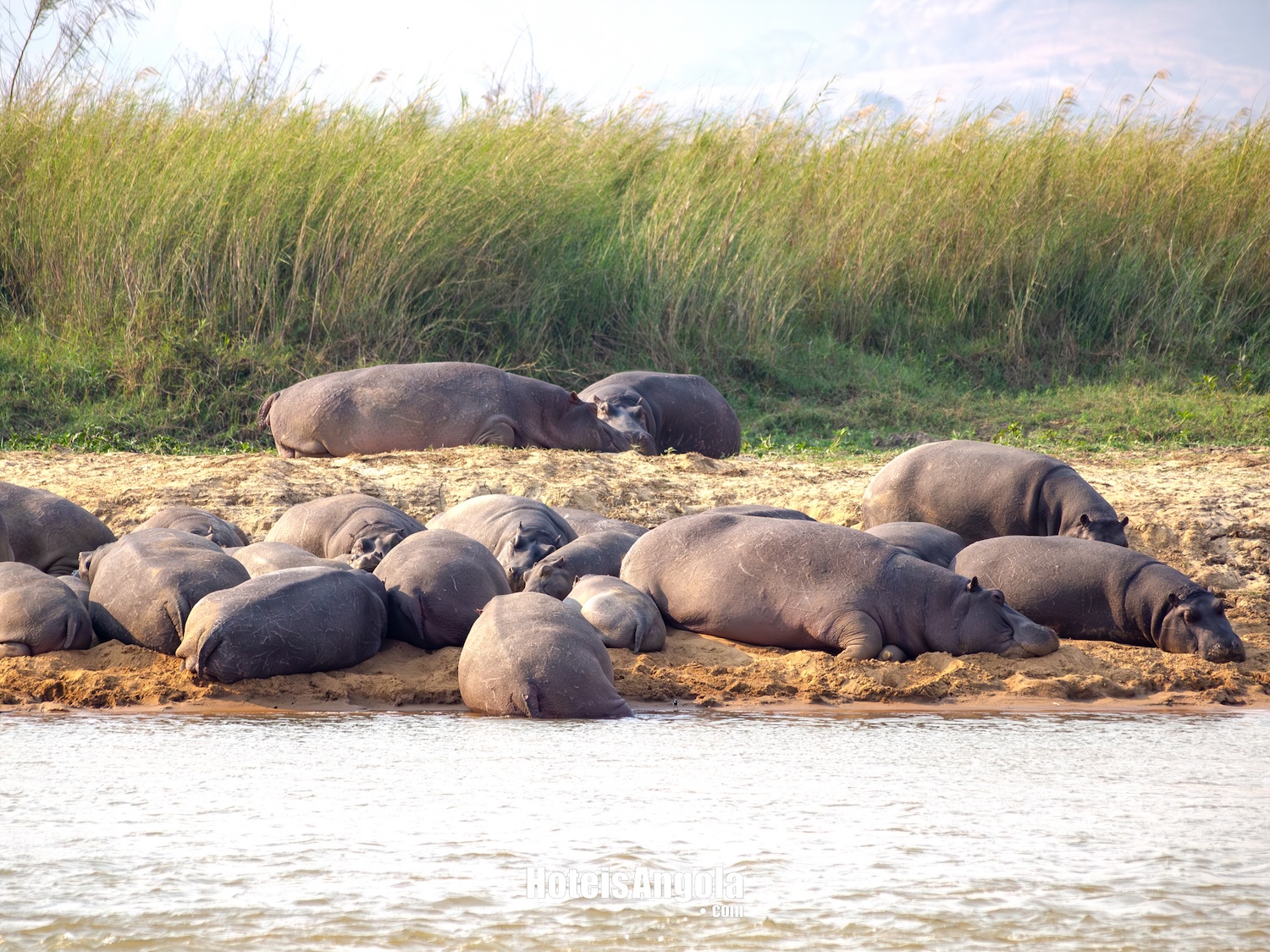
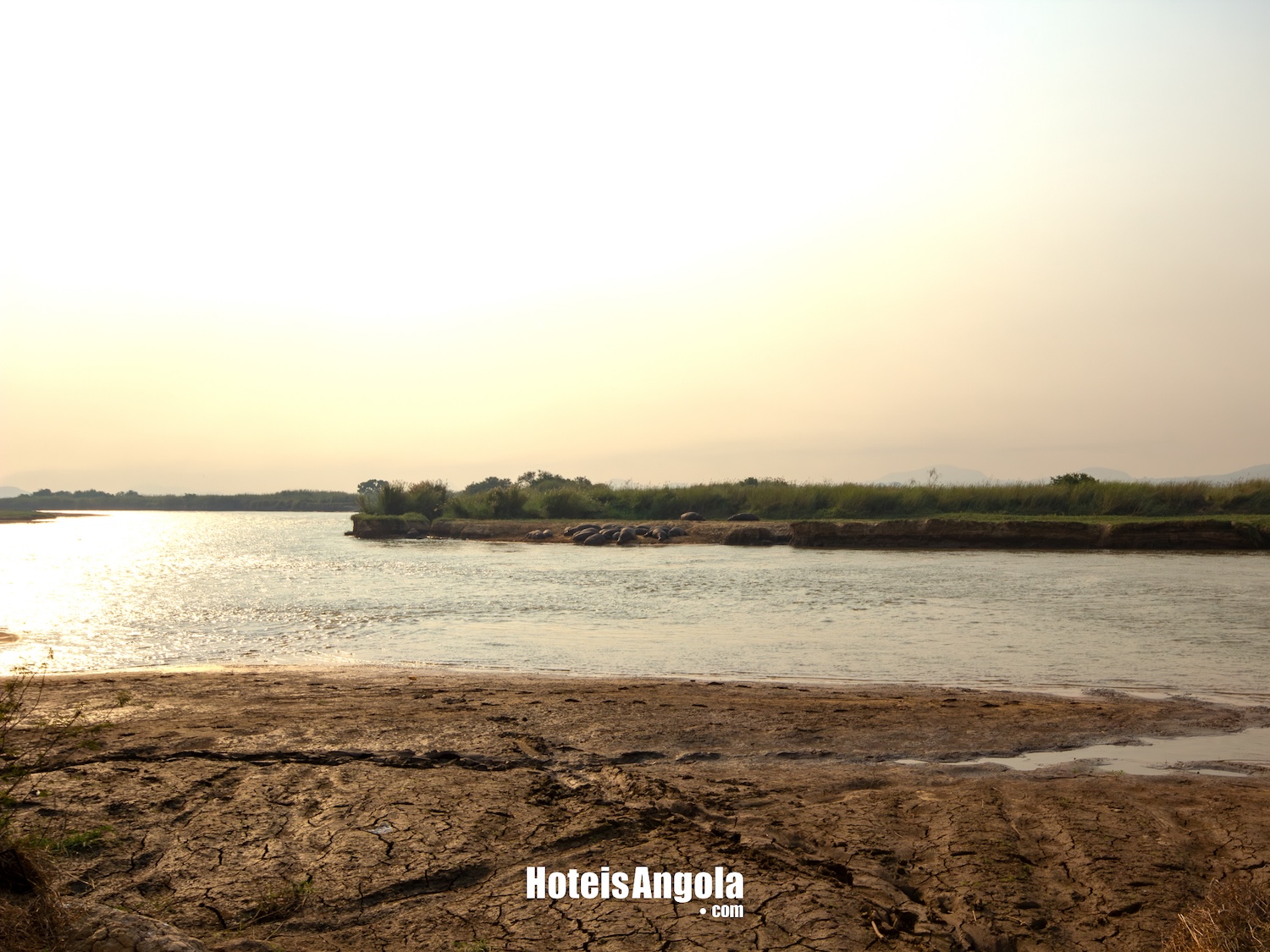
There was a lot of anxiety and uncertainty, as there was no guarantee that we would be able to see hippos, but upon arriving at the location we were treated to a magnificent view of a large group of hippos sunbathing.
Before you travel, get to know these animals:
Behavior:
Hippos spend most of their days in the water or mud with the other members of their group. Water serves to keep your body temperature low and prevent your skin from drying out. Most hippos fight with other hippos and reproduce in the water.
Hippos emerge from the water at dusk and travel inland, sometimes as far as 5 miles, to graze on the short grass, their main food source. These large animals can consume 68 kg of grass each night.
Like almost any herbivore, they will consume many other plants, but their natural diet is composed almost entirely of grass, with only minimal consumption of aquatic plants.
Hippos have (rarely) been filmed eating carrion, usually near water. There are other reports of meat eating, and even cannibalism and predation. The anatomy of a hippo's stomach is not suited to carnivory and eating meat is likely caused by aberrant behavior or nutritional stress.
The diet of hippos consists primarily of terrestrial grasses, even though they spend most of their time in the water.
Because of their size and habit of taking the same paths to feed, hippos can have a significant impact on the earth, keeping the earth clear of vegetation and pressing the ground. For prolonged periods, hippos can divert paths through marshes and waterways.
Adult hippos typically come out of the water to breathe every 3-5 minutes. Adult hippos move at speeds of up to 5 miles per hour while in the water. Young people have to breathe every two or three minutes.
The breathing process is automatic, and even if he sleeps he will come up and breathe without waking up. A hippopotamus closes its nostrils when submerged.
As with fish and turtles on a coral reef, sometimes the hippo visits "cleaning stations", and there when it opens its mouth it is a sign that the fish can clean existing parasites in its mouth. For many fish, these parasites are food.
Description:
These animals generally live close to rivers, where they spend much of their time immersed, as their skin is sensitive to sunlight. Hippos are herbivores and feed at night on the vegetation found on the banks of the rivers they inhabit, but there is evidence of cannibalism between adult males and their young.
Hippos are lazy on land, but can still reach speeds of 50 km/h. In the water they are fast and show several adaptations in their existence, mostly aquatic, including ears and nostrils that can close and a skin secretion that works as a sunscreen, antiseptic and antibacterial.
The skin of Hippos are very sensitive to sunburn and, to protect themselves, they secrete a red substance that from a distance can be mistaken for blood.
An adult male hippopotamus (which is almost always larger than the female) can measure 4 meters and weigh up to 3500 kg, making it one of the largest land mammals, behind only elephants and rhinos.
They have an extremely strong bite at around 810 kg, more than twice the bite of a lion.
The only natural predator of hippos is lions, which hunt them in packs.
Hippos are large animals, with herbivorous teeth, but they have large, self-sharpening canines that are used to defend themselves.
They cause more human deaths in Africa than lions, buffaloes, elephants and rhinos combined, they are very aggressive and territorial, they warn before attacking, they usually stare and then open their large mouth to show their teeth, but many people they mistake it for a yawn.
They live in gregarious groups of around twenty animals, made up of females and offspring and led by a male.
They can live an average of 30 years, however, in captivity, individuals of the pygmy hippopotamus species live between 42-55 years, longer than in the wild.
It is covered with rough gray skin - which in some places is more than 5 years old. cm thick - and stands on very short legs. A few sparse hairs spread across the body.
The hippopotamus is an excellent swimmer, as the fat is lighter than water, and is accumulated under the thick skin, it helps it float, in addition, the fat stabilizes the animal's internal temperature when it is in the water.
Hippos were sacred to the ancient Egyptians. The goddess of fertility, Tuéris, was represented as a bipedal hippopotamus.
Hippos are social animals, living in groups of 10 to 30 animals, although groups of more than a hundred have been observed.
Groups have several females and males but only one alpha male.
A mediation of encounters between males from the same group is done through the practice of "gaping", without translation into Portuguese, which consists of two males facing each other in the water and opening their mouths at an angle of up to 140 degrees, so as to offer the opponent an estimate of size, thus subduing smaller individuals and avoiding physical confrontations that could injure both.
Another curious behavior is called "flinging", whereby hippos spread their feces along the sandy line of the river, as well as along its trails in towards the pasture fields, in order to facilitate their movement without the use of their eyes, following trails back to the water with the help of their nose even in the absence of light.
Accompanied by an older man recommended by Soba, we continued our journey towards the indicated place.
There was a lot of anxiety and uncertainty, as there was no guarantee that we would be able to see hippos, but upon arriving at the location we were treated to a magnificent view of a large group of hippos sunbathing.
Before you travel, get to know these animals:
Behavior:
Hippos spend most of their days in the water or mud with the other members of their group. Water serves to keep your body temperature low and prevent your skin from drying out. Most hippos fight with other hippos and reproduce in the water.
Hippos emerge from the water at dusk and travel inland, sometimes as far as 5 miles, to graze on the short grass, their main food source. These large animals can consume 68 kg of grass each night.
Like almost any herbivore, they will consume many other plants, but their natural diet is composed almost entirely of grass, with only minimal consumption of aquatic plants.
Hippos have (rarely) been filmed eating carrion, usually near water. There are other reports of meat eating, and even cannibalism and predation. The anatomy of a hippo's stomach is not suited to carnivory and eating meat is likely caused by aberrant behavior or nutritional stress.
The diet of hippos consists primarily of terrestrial grasses, even though they spend most of their time in the water.
Because of their size and habit of taking the same paths to feed, hippos can have a significant impact on the earth, keeping the earth clear of vegetation and pressing the ground. For prolonged periods, hippos can divert paths through marshes and waterways.
Adult hippos typically come out of the water to breathe every 3-5 minutes. Adult hippos move at speeds of up to 5 miles per hour while in the water. Young people have to breathe every two or three minutes.
The breathing process is automatic, and even if he sleeps he will come up and breathe without waking up. A hippopotamus closes its nostrils when submerged.
As with fish and turtles on a coral reef, sometimes the hippo visits "cleaning stations", and there when it opens its mouth it is a sign that the fish can clean existing parasites in its mouth. For many fish, these parasites are food.
Description:
These animals generally live close to rivers, where they spend much of their time immersed, as their skin is sensitive to sunlight. Hippos are herbivores and feed at night on the vegetation found on the banks of the rivers they inhabit, but there is evidence of cannibalism between adult males and their young.
Hippos are lazy on land, but can still reach speeds of 50 km/h. In the water they are fast and show several adaptations in their existence, mostly aquatic, including ears and nostrils that can close and a skin secretion that works as a sunscreen, antiseptic and antibacterial.
The skin of Hippos are very sensitive to sunburn and, to protect themselves, they secrete a red substance that from a distance can be mistaken for blood.
An adult male hippopotamus (which is almost always larger than the female) can measure 4 meters and weigh up to 3500 kg, making it one of the largest land mammals, behind only elephants and rhinos.
They have an extremely strong bite at around 810 kg, more than twice the bite of a lion.
The only natural predator of hippos is lions, which hunt them in packs.
Hippos are large animals, with herbivorous teeth, but they have large, self-sharpening canines that are used to defend themselves.
They cause more human deaths in Africa than lions, buffaloes, elephants and rhinos combined, they are very aggressive and territorial, they warn before attacking, they usually stare and then open their large mouth to show their teeth, but many people they mistake it for a yawn.
They live in gregarious groups of around twenty animals, made up of females and offspring and led by a male.
They can live an average of 30 years, however, in captivity, individuals of the pygmy hippopotamus species live between 42-55 years, longer than in the wild.
It is covered with rough gray skin - which in some places is more than 5 years old. cm thick - and stands on very short legs. A few sparse hairs spread across the body.
The hippopotamus is an excellent swimmer, as the fat is lighter than water, and is accumulated under the thick skin, it helps it float, in addition, the fat stabilizes the animal's internal temperature when it is in the water.
Hippos were sacred to the ancient Egyptians. The goddess of fertility, Tuéris, was represented as a bipedal hippopotamus.
Hippos are social animals, living in groups of 10 to 30 animals, although groups of more than a hundred have been observed.
Groups have several females and males but only one alpha male.
A mediation of encounters between males from the same group is done through the practice of "gaping", without translation into Portuguese, which consists of two males facing each other in the water and opening their mouths at an angle of up to 140 degrees, so as to offer the opponent an estimate of size, thus subduing smaller individuals and avoiding physical confrontations that could injure both.
Another curious behavior is called "flinging", whereby hippos spread their feces along the sandy line of the river, as well as along its trails in towards the pasture fields, in order to facilitate their movement without the use of their eyes, following trails back to the water with the help of their nose even in the absence of light.
Waku-Kungo, Cassongue, , Kwanza-Sul, Angola
Localização
- Localiddae: Kassongue, Humbi
- Municipio: Waku-Kungo
- Provincia: Kwanza-Sul
- Coordenadas GPS: -11.174469495588461, 14.857294018916933
Observações Finais
- Observações Finais: Devem ser acompanhados por Guia Local e solicitar autorização ao Soba da Zona.
Image gallery
Map
Accommodation
Cuanza-Sul surrounding area
- from kz 49,000Emirais Hotel Spa
- from kz 59,910Hotel Kalunda
- from kz 46,800Hotel Ritz Sumbe
- from kz 27,000Hotel Ritz Waku-Kungo
- from kz 24,000Hotel Aanisa Ritz
- from kz 25,000Hotel Fazenda Cabuta
Support Line
 WhatsApp
 Telephone
 Email
Email
Available every day from 8:00 AM to 10:00 PM. Allows you to clarify doubts, support reservations, and guide you in choosing the best accommodation and tourist services.