- Hotels
- Rent-A-Car
- Routs
Huila Regional Museum
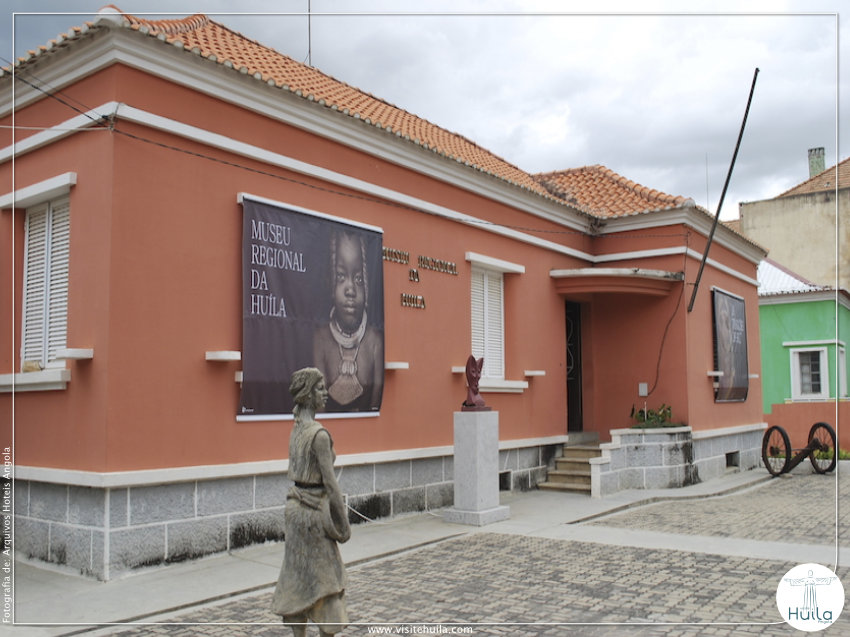
The Creation of the Huíla Regional Museum is inseparably linked, in its earliest genesis, to the creation of the first Museums in Angola.
José Mendes Ribeiro Norton de Matos, Governor General of Angola between 1911 and 1925, is recognized as the main driver of the scientific colonization policy that gave rise to the normative instruments for the beginning of scientific activities in the area of Social and Human Sciences, with a great impact in the creation of museums. (Fernando, 2001, p130)
Following these policies, the Ethnographic Museum of Angola and Congo was created in 1912, a private museum, and in 1936 the Dundo Museum, also private, owned by the Diamang Diamond Company. However, museological activity in Angola officially began on September 8, 1938 with the creation and opening of the Angola Museum, located in the Fortaleza de S. Miguel in Luanda. (Simão, 2015, p.18)
From this date onwards, the first museums of an Ethnographic and Colonial nature began to appear, all over the country.
The history of this museum is made known to us through documents contained in the Institution's documentary archive and through bibliographic sources consulted in order to understand its journey since its foundation. Initially called the Huíla Museum, it was installed in a residential building belonging to the doctor Arnaldo Correia who, having moved to Luanda, donated his house, in the old city of Sá-da-Bandeira, for scientific and cultural purposes. Machado da Cruz, researcher in the area of Social Sciences and professor at Liceu Diogo Cão, now Mandume Ya Ndemufayo University, took advantage of the opportunity to ask the then district Governor, Commander Peixoto Correia, for authorization to create and open a Museum in that city .
With the aim of collecting, housing, studying and disseminating materials from the Paleontological, Archaeological and Ethnographic domain, the Huíla Museum was founded in 1957 by Peixoto Correia, with Machado da Cruz serving as the first curator of this Institution. (Simão, 2015, p.22)
Machado da Cruz (1958) states that the Museum was created with several sections, two of which immediately came into operation.
The first section, Portuguese Ethnography, had an exclusively educational function, intended to show and introduce the children of the settlers, born in Angola, to Portuguese culture. The second, African Anthropology in its most diverse domains, was created with purely scientific and research purposes whose objective was to deepen knowledge about the Region, since its primitive settlement, having operated in this way until National Independence (1975) after which it became to be named Huíla Regional Museum.
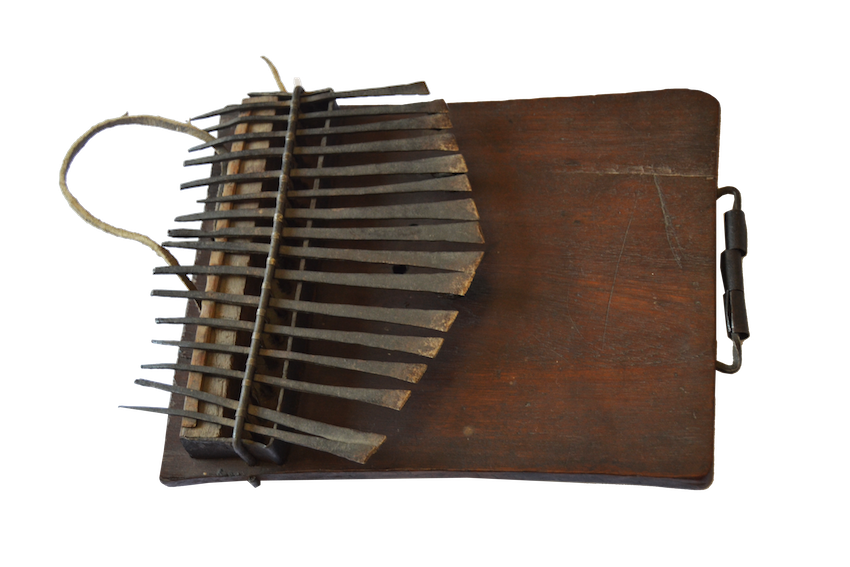
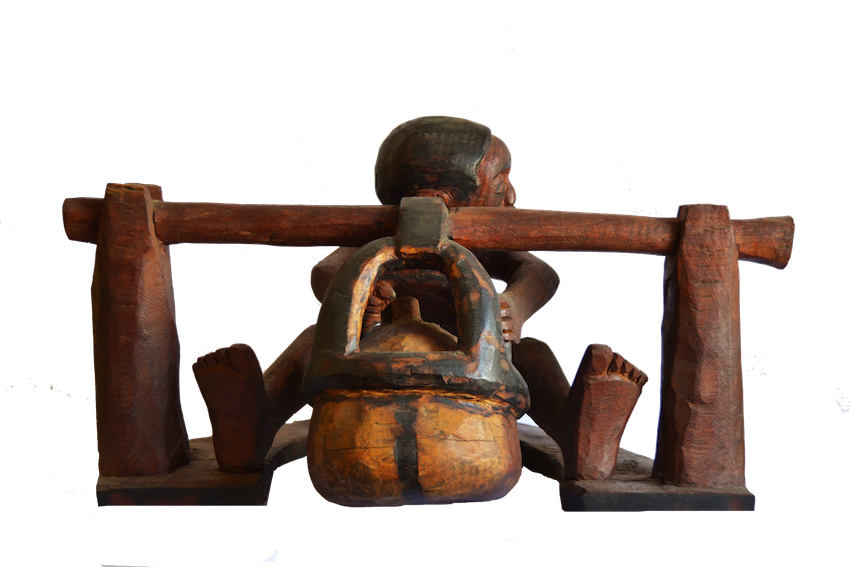
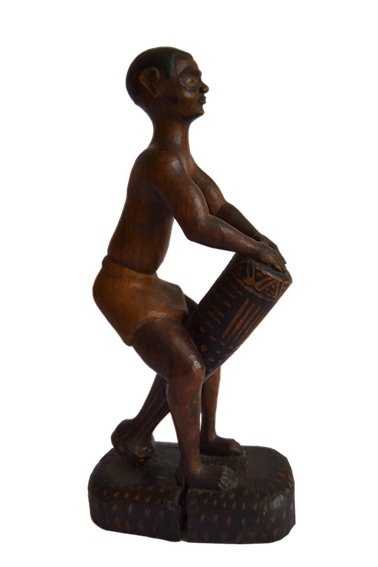
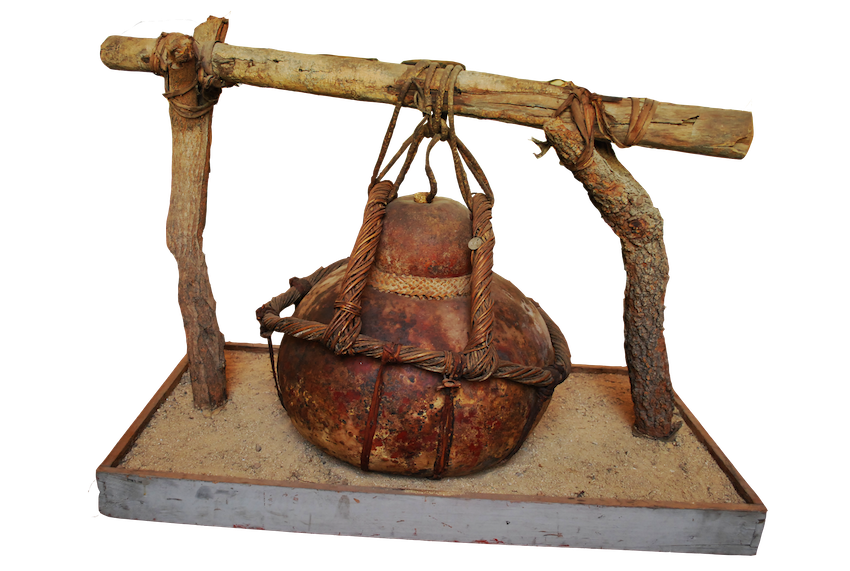
According to documentary sources, this designation resulted from two factors, the first being the fact that it is the only Museum in the South of Angola and secondly because it houses collections from not only the Province of Huíla, but also the Provinces of Namibe, Cunene and Kando Kubango, The result of years of collection and scientific research throughout this region. At this time the Portuguese ethnographic exhibition was removed, giving space exclusively to the collection that highlights the culture, habits, beliefs, customs and traditions of the Sulan peoples.
Until 2014 it operated as a dependent body of the Provincial Directorate of Culture of Huíla, seeing, in that year, its Organic Statute was approved by Executive Decree.
Building
It is a mid-20th century building adapted as a Museum. Composed of the ground floor and basement, where the permanent exhibition is located, it also has a beautiful garden where it is possible to observe the imposing statues of Artur de Paiva and João de Almeida and the busts of Luís de Camões, D. José da Câmara Leme and Agapito de Carvalho, figures from our colonial history.
GEOGRAPHIC FRAMEWORK AND LOCATION
The Huíla Regional Museum is a museum institution where the culture of the populations of the four Southern Provinces of Angola, Huíla, Namibe, Cunene and Kuando Kubango, is represented, located, since its foundation, in the city of Lubango, Huíla Province. Located in the heart of the city, Commercial District, Rua Dr. António Agostinho Neto, the Museum is easily accessible to all visitors, whether national or foreign.
Following these policies, the Ethnographic Museum of Angola and Congo was created in 1912, a private museum, and in 1936 the Dundo Museum, also private, owned by the Diamang Diamond Company. However, museological activity in Angola officially began on September 8, 1938 with the creation and opening of the Angola Museum, located in the Fortaleza de S. Miguel in Luanda. (Simão, 2015, p.18)
From this date onwards, the first museums of an Ethnographic and Colonial nature began to appear, all over the country.
The history of this museum is made known to us through documents contained in the Institution's documentary archive and through bibliographic sources consulted in order to understand its journey since its foundation. Initially called the Huíla Museum, it was installed in a residential building belonging to the doctor Arnaldo Correia who, having moved to Luanda, donated his house, in the old city of Sá-da-Bandeira, for scientific and cultural purposes. Machado da Cruz, researcher in the area of Social Sciences and professor at Liceu Diogo Cão, now Mandume Ya Ndemufayo University, took advantage of the opportunity to ask the then district Governor, Commander Peixoto Correia, for authorization to create and open a Museum in that city .
With the aim of collecting, housing, studying and disseminating materials from the Paleontological, Archaeological and Ethnographic domain, the Huíla Museum was founded in 1957 by Peixoto Correia, with Machado da Cruz serving as the first curator of this Institution. (Simão, 2015, p.22)
Machado da Cruz (1958) states that the Museum was created with several sections, two of which immediately came into operation.
The first section, Portuguese Ethnography, had an exclusively educational function, intended to show and introduce the children of the settlers, born in Angola, to Portuguese culture. The second, African Anthropology in its most diverse domains, was created with purely scientific and research purposes whose objective was to deepen knowledge about the Region, since its primitive settlement, having operated in this way until National Independence (1975) after which it became to be named Huíla Regional Museum.
According to documentary sources, this designation resulted from two factors, the first being the fact that it is the only Museum in the South of Angola and secondly because it houses collections from not only the Province of Huíla, but also the Provinces of Namibe, Cunene and Kando Kubango, The result of years of collection and scientific research throughout this region. At this time the Portuguese ethnographic exhibition was removed, giving space exclusively to the collection that highlights the culture, habits, beliefs, customs and traditions of the Sulan peoples.
Until 2014 it operated as a dependent body of the Provincial Directorate of Culture of Huíla, seeing, in that year, its Organic Statute was approved by Executive Decree.
Building
It is a mid-20th century building adapted as a Museum. Composed of the ground floor and basement, where the permanent exhibition is located, it also has a beautiful garden where it is possible to observe the imposing statues of Artur de Paiva and João de Almeida and the busts of Luís de Camões, D. José da Câmara Leme and Agapito de Carvalho, figures from our colonial history.
GEOGRAPHIC FRAMEWORK AND LOCATION
The Huíla Regional Museum is a museum institution where the culture of the populations of the four Southern Provinces of Angola, Huíla, Namibe, Cunene and Kuando Kubango, is represented, located, since its foundation, in the city of Lubango, Huíla Province. Located in the heart of the city, Commercial District, Rua Dr. António Agostinho Neto, the Museum is easily accessible to all visitors, whether national or foreign.
Rua Dr. Agostinho Neto, Lubango, Huíla, Angola
Map
Galeria
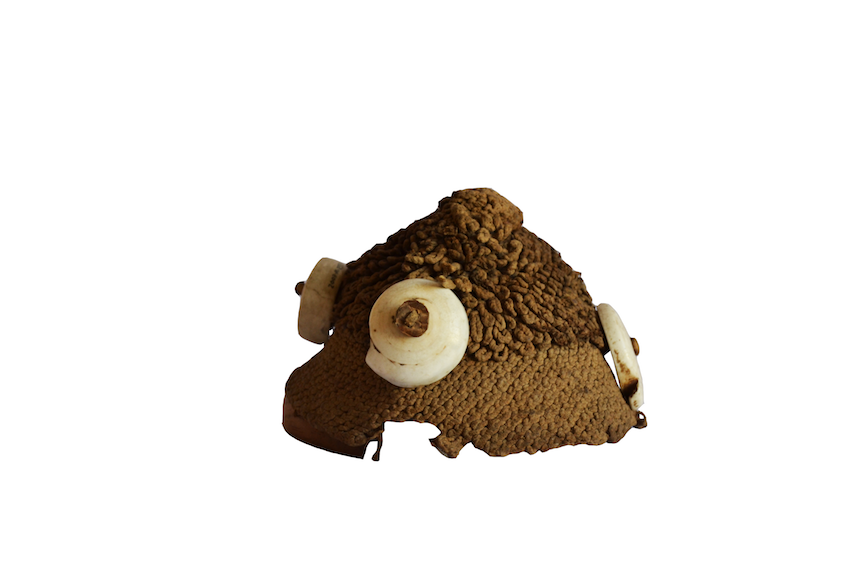



Descarregar Livro\Catalogo Completo

A Herança Secular dos Povos do Sul de Angola
Document PDF, 857 downloads, Sep 18, 2023 15:08
Alojamento
Huíla surrounding area
- from kz 105,000Hotel Serra da Chela
- from kz 60,000Kimbo do soba
- from kz 101,440Pululukwa Resort
- from kz 35,000Hospedaria S&I Freitas
- from kz 52,500Hotel Vip Huila
- from kz 60,000Hotel Chik Chik Lubango
- from kz 42,265Zoom`s Lodge
- from kz 60,000Vila Mara Flats
- from kz 55,000Hotel Yona Lubango
- from kz 22,500Pousada de Quilengues
- from kz 105,000Mumba Lodge
- from kz 40,000Mask Hotel
- from kz 33,000Huíla Park Residence
Support Line
 WhatsApp
 Telephone
 Email
Email
Available every day from 8:00 AM to 10:00 PM. Allows you to clarify doubts, support reservations, and guide you in choosing the best accommodation and tourist services.