- Hotels
- Rent-A-Car
- Routs
Interior of the Archdiocese of Lubango - Saint Joseph Cathedral
Established as the Diocese of Sá da Bandeira in 1939, through the division of the Diocese of Nova Lisboa, it was a suffragan of the Archdiocese of Luanda.
Situated in the centre of the city of Lubango, since its construction it has undergone several transformations, as have the Bishops Altino Ribeiro de Santana (1955 - 1972), Eurico Dias Nogueira (1972 - 1977) and the Archbishops Alexandre do Nascimento (1977 - 1986), Manuel Franklin da Costa (1986 - 1997), Zacarias Kamwenho (1997 - 2009), Gabriel Mbilingi, C.S.Sp. (since 2009).
The current Archdiocese of Lubango is one of the most important religious institutions in Angola and plays a fundamental role in the spiritual, cultural and historical life of the southern region of the country. Its origins date back to 4 September 1939, when the Diocese of Sá da Bandeira was created, through the division of the then Diocese of Nova Lisboa (currently the Archdiocese of Huambo), initially becoming a suffragan of the Archdiocese of Luanda.
Located in the heart of the city of Lubango, its cathedral stands out for its architectural grandeur and historical value. Since its construction, the building has undergone several transformations and conservation works aimed at keeping pace with the growth of the Catholic population and the pastoral needs of the region. Despite the interventions carried out over the decades, the temple preserves much of its original characteristics, making it one of the most emblematic architectural landmarks of the city.
In 1984, the Diocese was elevated to the status of Metropolitan Archdiocese and became known as the Archdiocese of Lubango. This change reflected the growing importance of the Catholic Church in southern Angola and the leadership role that the institution came to exercise over other dioceses in the province and the region.
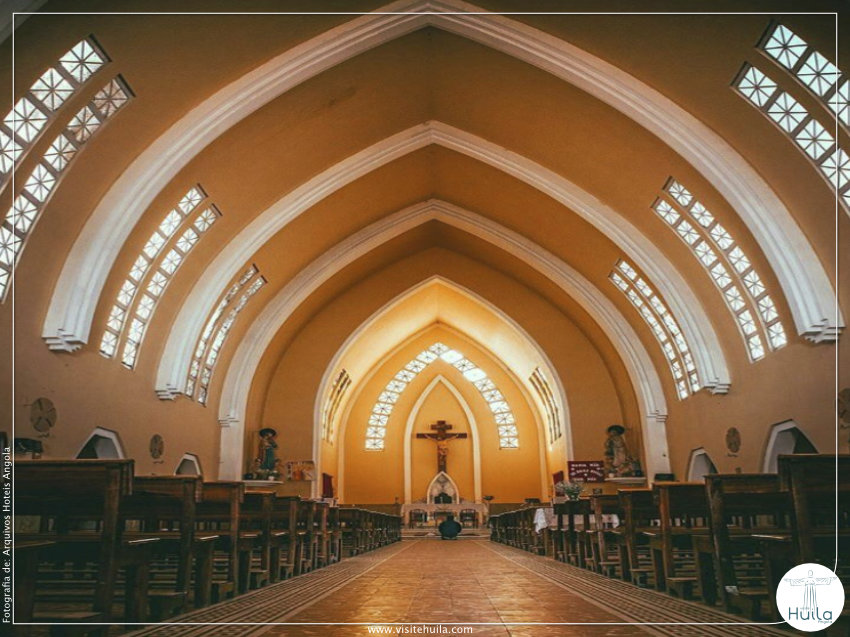
The interior of the cathedral impresses with its spaciousness, the stained-glass windows that allow natural light to enter, and the artistic details present in the altar, the sacred images and the decorative elements that portray the Christian faith. The atmosphere of serenity and contemplation makes the site a privileged space for prayer, religious celebrations and moments of spiritual reflection.
In addition to its religious significance, the Archdiocese of Lubango also constitutes an important historical and tourist heritage site.
Visited by worshippers, researchers and national and international tourists, it represents a living testimony to evangelisation in Angola and to the influence of the Catholic Church on the social, educational and cultural development of the region. Today, the Archdiocese continues to play an active role in promoting human and Christian values, supporting social, educational and community initiatives, while preserving one of the most significant historical and religious legacies of the city of Lubango.
The current Archdiocese of Lubango is one of the most important religious institutions in Angola and plays a fundamental role in the spiritual, cultural and historical life of the southern region of the country. Its origins date back to 4 September 1939, when the Diocese of Sá da Bandeira was created, through the division of the then Diocese of Nova Lisboa (currently the Archdiocese of Huambo), initially becoming a suffragan of the Archdiocese of Luanda.
Located in the heart of the city of Lubango, its cathedral stands out for its architectural grandeur and historical value. Since its construction, the building has undergone several transformations and conservation works aimed at keeping pace with the growth of the Catholic population and the pastoral needs of the region. Despite the interventions carried out over the decades, the temple preserves much of its original characteristics, making it one of the most emblematic architectural landmarks of the city.
In 1984, the Diocese was elevated to the status of Metropolitan Archdiocese and became known as the Archdiocese of Lubango. This change reflected the growing importance of the Catholic Church in southern Angola and the leadership role that the institution came to exercise over other dioceses in the province and the region.
The interior of the cathedral impresses with its spaciousness, the stained-glass windows that allow natural light to enter, and the artistic details present in the altar, the sacred images and the decorative elements that portray the Christian faith. The atmosphere of serenity and contemplation makes the site a privileged space for prayer, religious celebrations and moments of spiritual reflection.
In addition to its religious significance, the Archdiocese of Lubango also constitutes an important historical and tourist heritage site.
Visited by worshippers, researchers and national and international tourists, it represents a living testimony to evangelisation in Angola and to the influence of the Catholic Church on the social, educational and cultural development of the region. Today, the Archdiocese continues to play an active role in promoting human and Christian values, supporting social, educational and community initiatives, while preserving one of the most significant historical and religious legacies of the city of Lubango.
Lubango, Angola
Map
Huíla surrounding area
- from kz 105,000Hotel Serra da Chela
- from kz 60,000Kimbo do soba
- from kz 101,440Pululukwa Resort
- from kz 35,000Hospedaria S&I Freitas
- from kz 52,500Hotel Vip Huila
- from kz 60,000Hotel Chik Chik Lubango
- from kz 42,265Zoom`s Lodge
- from kz 60,000Vila Mara Flats
- from kz 55,000Hotel Yona Lubango
- from kz 22,500Pousada de Quilengues
- from kz 105,000Mumba Lodge
- from kz 40,000Mask Hotel
- from kz 33,000Huíla Park Residence
Support Line
 WhatsApp
 Telephone
 Email
Email
Available every day from 8:00 AM to 10:00 PM. Allows you to clarify doubts, support reservations, and guide you in choosing the best accommodation and tourist services.