- Hotels
- Rent-A-Car
- Routs
Strawberry farm holds the last traces of the Boers in Angola

Forty years after the last Boers left Humpata, an Angolan farm dedicated to the production of strawberries religiously guards what will be the last traces of the presence of that historic South African community in Angola.
The family took over the farm, which is visited every year by caravans from the south -Africans and Namibians, countries where their descendants still live.
"Because they were all leaving, leaving", the young farmer begins by explaining to Lusa, remembering the departure of the last Boers, in this case the proximity of the end of the Portuguese colonial period.
A 20-minute drive from Lubango, capital of Huíla, a province in the south of Angola, Humpata is an essentially agricultural town, with large farms, and the installation, more than a century ago, of the Boers contributed to this.
" They came here, produced, worked hard and when they got bored they picked up and left again for South Africa", recalls Yudo Borges, the current administrator of Jamba Farm, which he inherited from his father and grandfather.
The Boers, or Afrikaners, are descendants of the Dutch who settled in South Africa, particularly in the Cape Colony, in the mid-17th century, and of French Protestants who fled the religious wars in Europe.
They even developed their own language - Afrikaans, currently one of the official languages of South Africa -, but after wars with the British, in dispute over the colonization of that territory, the community, highly specialized in agricultural production, began the so-called "Great Journey" to the north.
Part of the group continued their journey through the current territory of Namibia, reaching and traveling along the banks of the Cubango and Cunene rivers, arriving in Angola at the end of the 19th century.
After understanding with the Portuguese colonial power, they were authorized to cultivate land in Humpata , as was the case with the farm then, it is thought, created by the family patriarch, Johannes Van Der Merwe, still buried today in the farm's cemetery.
According to the inscription on the tombstone placed in the grave, he was born in 1752 and died in Humpata on June 9, 1884.
Van Der Merwe or Botha are the surnames of the Boer families buried several decades ago in the cemetery on that farm, the only one of the several that existed in Humpata that is properly preserved.
In just one week, the farm can produce up to nine tons of strawberries weekly and the ambition of Yudo Borges, 35 years old, heir to the family business and who graduated in farm management in South Africa, is to start exporting, after farm certification.
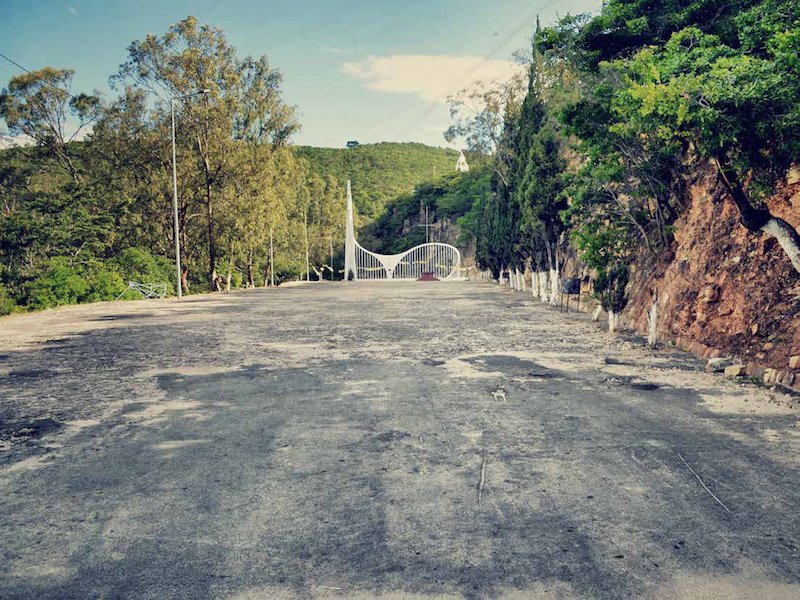

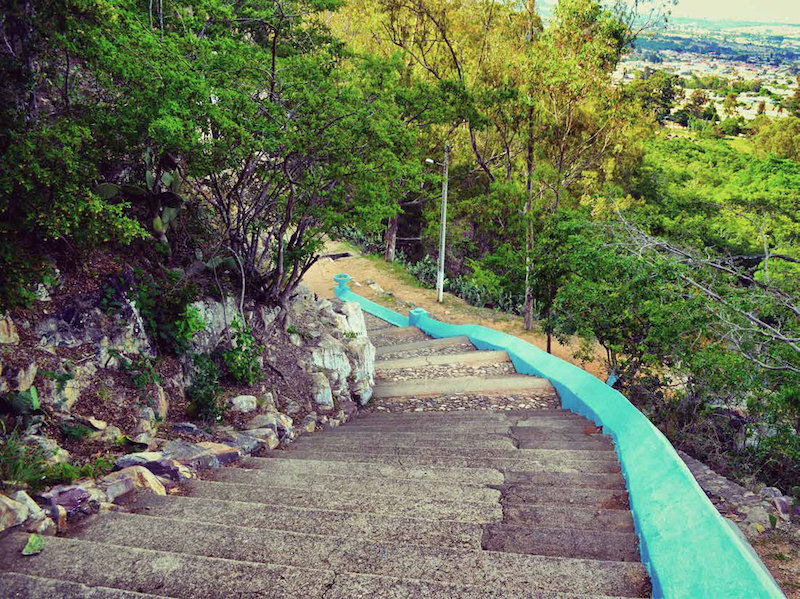
The construction of the chapel can be analyzed in two moments: (1) construction of a primitive chapel, guided by the bricklayer Jacinto Rodrigues and the carpenter João da Silva. It was still under construction, when on August 15, 1902, the parish priest celebrated a field mass next to the unfinished chapel, using an image of Nª Senhora da Conceição. It was Venâncio Ferreira Rodrigues who acquired, in Porto, the image of Nª Senhora do Monte, in fulfillment of a promise made. This image arrived in Lubango on June 29, 1903. After the original chapel was concluded, the new parish priest, Father José Martins, on behalf of the Bishop of Angola and Congo, blessed it on August 14, 1903. From August 15 from 1903 the population of Lubango started to go to the chapel to celebrate the pilgrimage that became traditional; (2) In 1919, João Henrique de Azevedo idealized and designed a broader chapel that could be visible from any corner of the village and was inaugurated in 1921. From 1930 the image was brought processionally from the chapel to the park, since many Madeirans, already elderly, did not have enough strength to go up to the chapel site. There were several interruptions in the pilgrimages and the last one happened in 1975 with the advent of the independence of Angola, having restarted only in 1986 (Sousa, 2013).
Although another chapel was built at the top of Serra da Chela, the place remained insufficient to accommodate a large number of believers who came to it. Thus, in order to accommodate more believers, the architect Frederico Ludovici conceived an open-air project in a space below the chapel where the masses of the month of August are today held, when the flow of believers is greater. The access to the chapel is made through a paved road that meanders the mountain in an approximate distance of 300 meters to the space destined to the field mass which is a plan. Then there is a 200-meter staircase towards the chapel built in the mountains. From an initially elite place (predominantly Portuguese) it became a place of worship frequented by believers of various nationalities and social backgrounds. The chapel is today a symbol of Catholicism in Lubango and the month of August represents the highest point of the celebrations for the ascension of Our Lady, mother of Jesus.
The procession The 14th of August has been marked by the procession of candles from the Chapel of Nossa Senhora do Monte to the church of the Cathedral (built in 1955). There are a significant number of believers involved in this process who are slowly marching through the city's arteries, reciting the rosary, praying the Our Father's prayer and asking for Our Lady's grace and mercy. The image of Our Lady of the Assumption offered by Venâncio Ferreira Rodrigues became the symbol and image of choice for the procession to the mount of Catholics seconded in Lubango. The pilgrimage takes place on the 15th of August and began at the Church of Nossa Senhora de Assunção (built in 1963, known as Igreja da Lage). Then, she was taken in a car procession to the area of the statue of liberty where, through a pedestrian procession, she was carried on her shoulder to the chapel located on the hill. Currently, the procession has departed from the church of the Cathedral.
Once the andor was carried to the Capela do Monte, a mass is held in honor of the patron saint. Initially, the patron saint was deposited inside the chapel and stayed there. Due to successive assaults on account of the monetary amounts that were deposited inside the chapel, mainly by the faithful who carried out their promises outside the chapel and put the money under the door, the andor began to be deposited in the church of the Cathedral. After a few years with activities limited to the August procession, today we can observe the organization of services twice a week (on Fridays with the prayer of the rosary and on Sundays with a mass in the terrace) and a strong movement to revitalize the mystique of the Chapel of Nossa Senhora do Monte
Fonte: Helder Alicerces Bahu Instituto Superior de Ciências da Educação da Huíla (ISCED-Huíla)
Galeria


Localização
Alojamento
Huíla surrounding area
- from kz 105,000Hotel Serra da Chela
- from kz 60,000Kimbo do soba
- from kz 101,440Pululukwa Resort
- from kz 35,000Hospedaria S&I Freitas
- from kz 52,500Hotel Vip Huila
- from kz 60,000Hotel Chik Chik Lubango
- from kz 42,265Zoom`s Lodge
- from kz 60,000Vila Mara Flats
- from kz 55,000Hotel Yona Lubango
- from kz 22,500Pousada de Quilengues
- from kz 105,000Mumba Lodge
- from kz 40,000Mask Hotel
- from kz 33,000Huíla Park Residence