- Hotels
- Rent-A-Car
- Routs
Our Catumbela
Catumbela is a place known to those who pass between Lobito and Benguela, but its identity is often unknown to tourists who visit the region. The city has a majestic bridge and an airport, making it a halfway point between the capital and the busy port of Lobito. With its rich history and delicious cuisine, Catumbela is a true Angolan treasure.
"The name Catumbela comes from a soba who lived there. Quitumbela was his name." He lived with his people, the Ndombe, on the left bank of the river, next to swamps. On the other side of the water line famous for its huge alligators, there lived farmers from Quissanje, Cahula and Hanha.
The history of Ndombe resistance to Portuguese colonial appetites was heroic. Between 1618 and the beginning of the 19th century, the original settlement resisted all attempts at conquest. Outside the soba's domains, on land that belongs to the new municipality of Catumbela (created on October 5, 2011), the settlers created commercial warehouses. Products arrived there from distant lands such as Lundas and Bié, along a route known as Namano or Camacuto. Rubber, gums, wax and ivory. And slaves captured in the interior.
Catumbela was a real warehouse for thousands of people before embarking across the Atlantic, at the Port of Benguela. The history of the village itself began in 1836, when it was created on the left bank of the Catumbela river under the name Nova Asseiceira. In 1846, the construction of Forte de São Pedro, a must-visit place, confirmed Portuguese dominance in the region.
The previously isolated village on the right bank of the river began to gain prominence from 1856 onwards, colonial buildings were built there. Between 1904 and 1913 it was, for the first time, a municipality.
In the years that followed it gained importance, especially for the sugar industry, with the installation of several farms and the Sociedade Agrícola da Cassequel, a gigantic industrial building at the entrance to the town. /p>
The surviving iron skeleton is one of the points of interest for anyone visiting Catumbela. True relic of industrial archeology. Little by little the town of Catumbela began to take shape, in the shadow of the hills that surround it. Scenographic identity: The squares like Quitanda, the streets, the river; the commercial houses, the Town Hall with its bell tower and the imposing church; the beautiful railway station and multi-storey buildings with colonial architecture that still dot Catumbela today.
   |
Between the end of the 19th century and the beginning of the 20th century, colonial Catumbela was connected by road to Benguela and saw the birth of the first bridge, replaced by the old and iconic metal structure that we all know, after the original crossing collapsed in 1903.
Today, Catumbela is a municipality again and one of Benguela's industrial hubs. But the picturesque village deserves to be much better known. Catumbela is not just a passing point, it has an interesting history to discover, which can be seen with the naked eye by wandering its streets.
The river with its beautiful banks and the sea, on the other side, are the icing on the cake. There are several beaches along the coastline. One of the best known, and which is even the communal headquarters, is Praia Bebé. Sand with the special touch of Benguela beaches.
  |
Accommodation
Benguela surrounding area
- 8.8 27 reviews from kz 90,000Aparthotel Mil Cidades
- 6.9 24 reviews from kz 50,000Hotel Praia Morena
- 7.4 9 reviews from kz 45,000Hotel Luso
- 7.4 5 reviews from kz 25,000Calmito Aparthotel
- 7.6 5 reviews from kz 27,000Residencial Royal Plaza Ombaka
- 0.0 0 reviews from kz 35,900Hotel Residencial KUYOYA
- 8.4 3 reviews from kz 33,990Hotel Pequeno Brasil
- 7.4 2 reviews from kz 22,000Residencial VG - Navegantes
- 8.5 3 reviews from kz 22,000Residencial VG - Cidade
- 0.0 0 reviews from kz 60,000Residencial Mussenga
- 9.6 2 reviews from kz 54,500Flow Hotel
- 6.7 3 reviews from kz 19,500Residencial Azul
- 8.8 2 reviews from kz 20,000Residencial Filipa
Lobito surrounding area
- 6.9 7 reviews from kz 36,800Hotel Chik Chik II
- 7.5 11 reviews from kz 78,000Hotel Turimar
- 7.8 2 reviews from kz 30,000Uami Guest House
- 8.1 10 reviews from kz 50,000Hotel H&L
- 7.2 1 reviews from kz 70,000Pink House
- 8.0 10 reviews from kz 16,000Residencial Rosalina Express
- 0.0 0 reviews from kz 45,000Baía da Restinga - Guest House
- 8.9 6 reviews from kz 55,000Oceano Boutique Hotel
- 0.0 0 reviews from kz 80,500Aparthotel Aurora
- 9.2 1 reviews from kz 75,000Almar Aparthotel
Baía Farta surrounding area
- 7.4 10 reviews from kz 90,000Hotel Duas Faces
- 8.3 9 reviews from kz 75,000Lodge Kapembawé
- 8.1 19 reviews from kz 115,000CV Lodge & Spa
+ Travel Itineraries
-
 Museum Route located in Luanda, This itinerary is an immersive journey through the origins, memories and living expressions of the Angolan capital.
 -
 Namibe Desert, takes you to discover its charms.
 -
 Discover the wonders of Huíla province in Angola with an unforgettable tourist itinerary that covers the most emblematic and stunning tourist attractions in the region.
 -
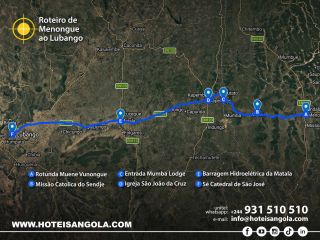 This Itinerary is a true immersion in the wild nature and cultural authenticity of southeast Angola.
Informations:
Newsletter - Promotions and highlights in your email
Support Line
 WhatsApp
 Telephone
 Email
Email
Available every day from 8:00 AM to 10:00 PM. Allows you to clarify doubts, support reservations, and guide you in choosing the best accommodation and tourist services.