- Hotels
- Rent-A-Car
- Routs
Black Stones
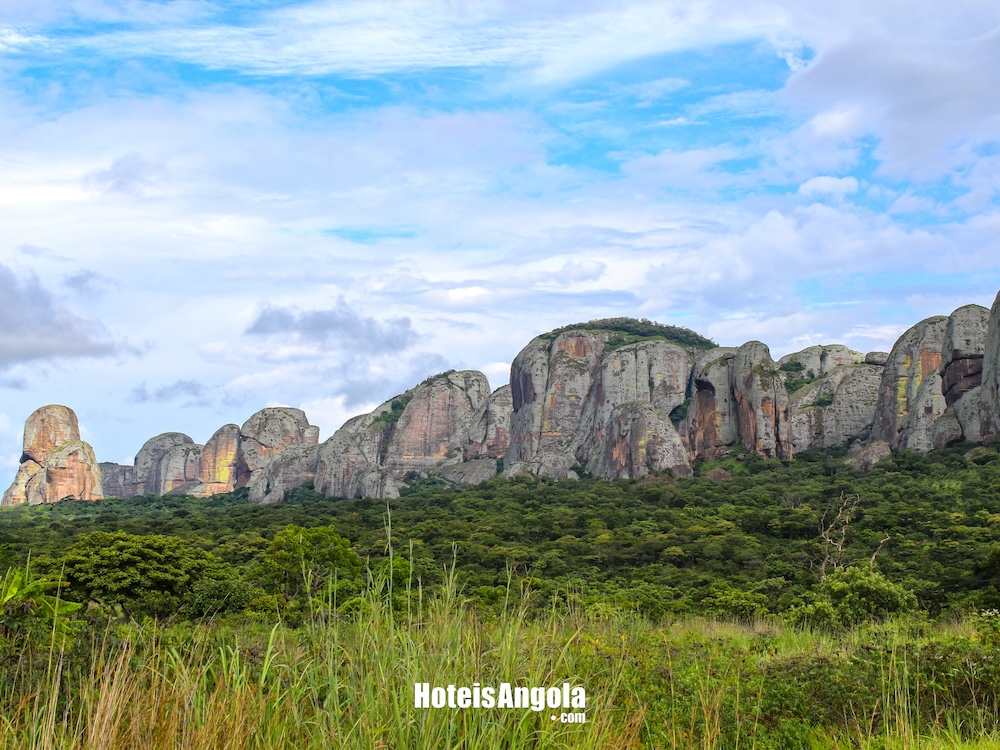
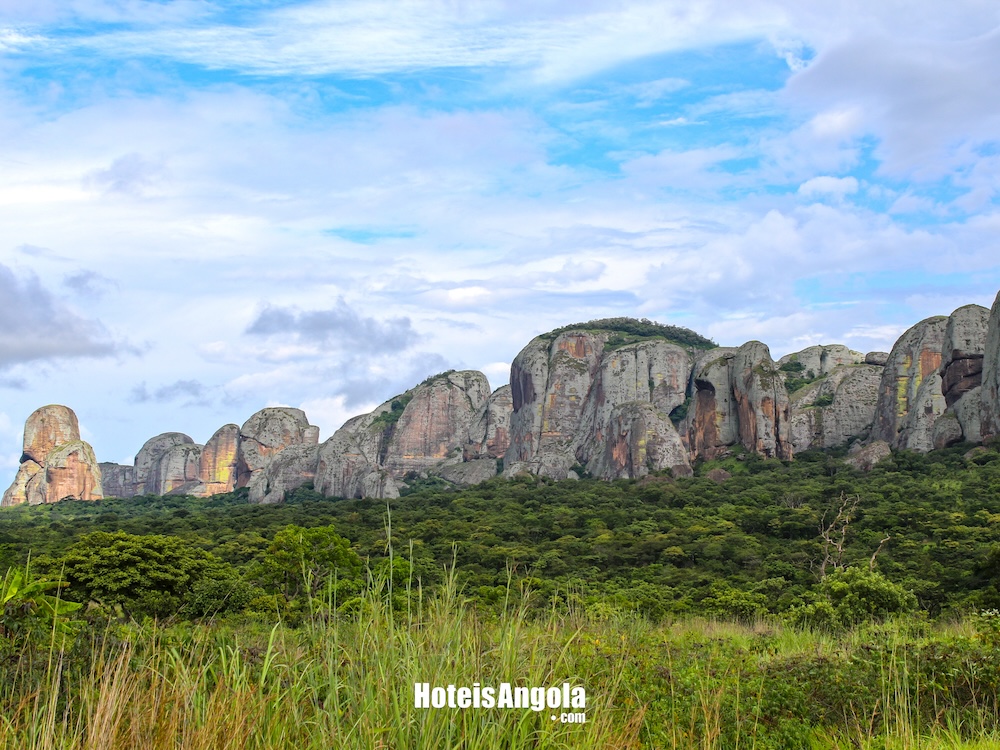
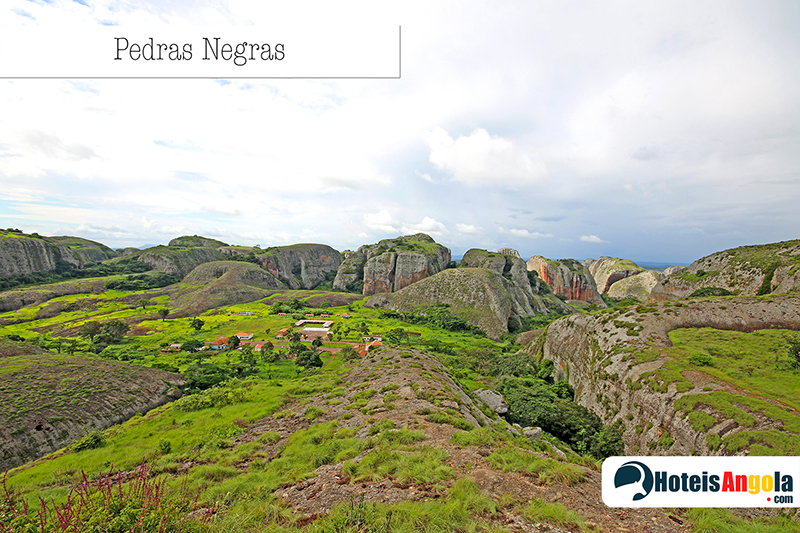
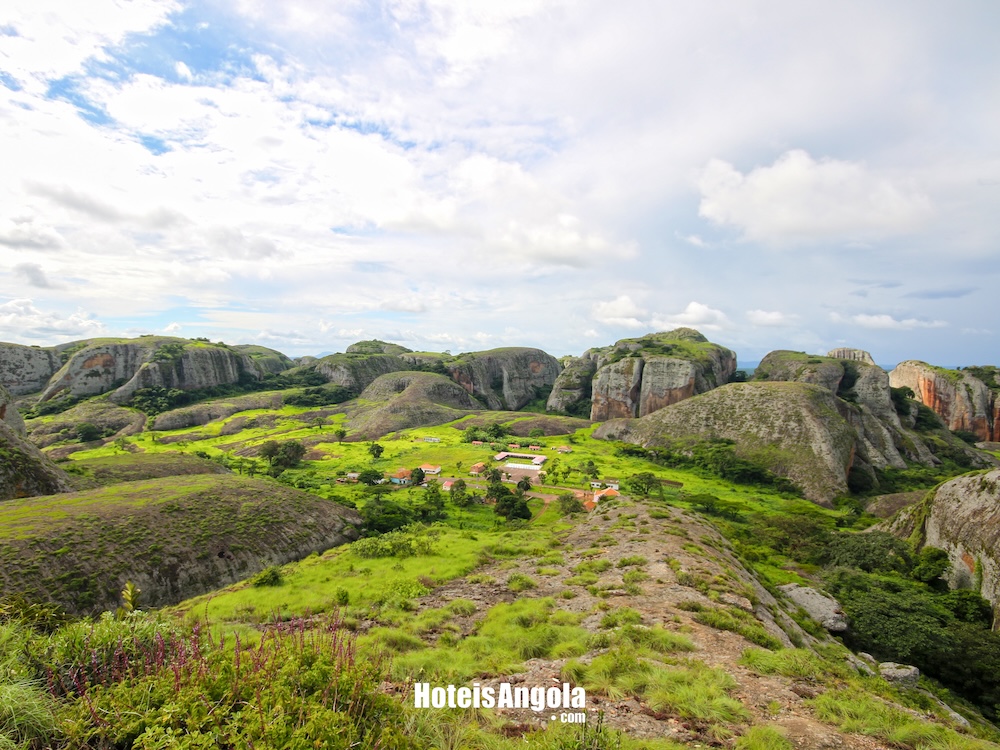
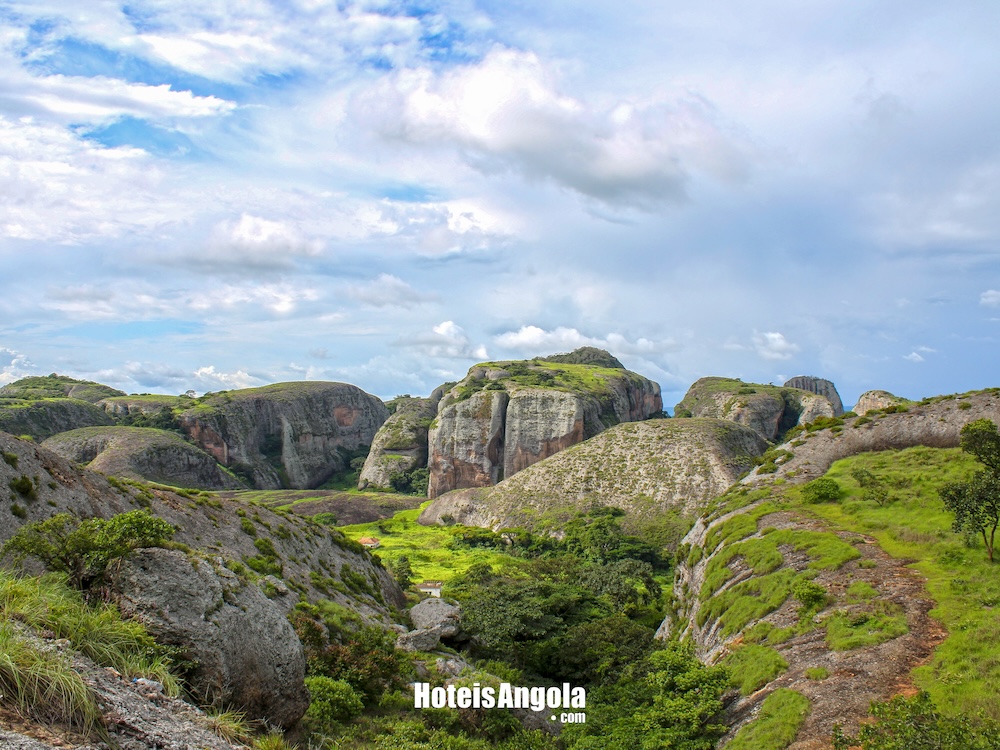
The Black Stones of Pungo Andongo are an almost surreal natural spectacle with monumental stones that rise between the vegetation and the meandering of the Kwanza River.
Here it is said that the footprints of Queen N’Ginga M’Bandi and her father, King N’Gola Kiluange, are marked.
It is a place full of myths, legends, traditions, and cultural values.
Due to its topographical and geomorphological characteristics, Pungo Andongo once served as a fortress for the Kings N’Gola, being the capital of the Kingdom of Ndongo at that time.
The name may come from the national language Kimbundu, where "ma-lanji" means "the stones," a name easily justified by the gigantic rock formations in the Pungo Andongo region, in the Cacuso municipality.
However, some argue that the name's origin dates back to an encounter between the first Portuguese colonizers and the local people, shortly after crossing the Rio Malanje, then Kadianga. When asked about the name of that river, they heard the response: "Ma-lanji Ngana" ("they are stones, Lord"), referring to how they managed to cross it.
There is a belief that this name was only attributed later when a Portuguese expedition encountered some local women who, when questioned about life in the village, responded in Kimbundu, "Mala hanji," meaning "There are men too."
The naming is not limited to these three explanations. Another narrative, advocated by some natives, proposes that it stems from the expression "Malagi," uttered by a chief upon receiving news that the Portuguese were preparing to use force to occupy the region, questioning: "Malagi," meaning "Are they crazy?".
It is a place full of myths, legends, traditions, and cultural values.
Due to its topographical and geomorphological characteristics, Pungo Andongo once served as a fortress for the Kings N’Gola, being the capital of the Kingdom of Ndongo at that time.
The name may come from the national language Kimbundu, where "ma-lanji" means "the stones," a name easily justified by the gigantic rock formations in the Pungo Andongo region, in the Cacuso municipality.
However, some argue that the name's origin dates back to an encounter between the first Portuguese colonizers and the local people, shortly after crossing the Rio Malanje, then Kadianga. When asked about the name of that river, they heard the response: "Ma-lanji Ngana" ("they are stones, Lord"), referring to how they managed to cross it.
There is a belief that this name was only attributed later when a Portuguese expedition encountered some local women who, when questioned about life in the village, responded in Kimbundu, "Mala hanji," meaning "There are men too."
The naming is not limited to these three explanations. Another narrative, advocated by some natives, proposes that it stems from the expression "Malagi," uttered by a chief upon receiving news that the Portuguese were preparing to use force to occupy the region, questioning: "Malagi," meaning "Are they crazy?".
Pungo Andongo, Angola
Localização
- Localiddae: Pungo Andongo
- Provincia: Malanje
- Coordenadas GPS: -9.650193422652091, 15.595304614913518
Map
Gallery:



Accommodation
Malanje surrounding area
- from kz 65,000Pousada Quedas Duque de Bragança
- from kz 74,440Kahombo Rural
Support Line
 WhatsApp
 Telephone
 Email
Email
Available every day from 8:00 AM to 10:00 PM. Allows you to clarify doubts, support reservations, and guide you in choosing the best accommodation and tourist services.
Next article
Evangelical Mission of Quessua