- Hotels
- Rent-A-Car
- Routs
Mouth of the Longa River
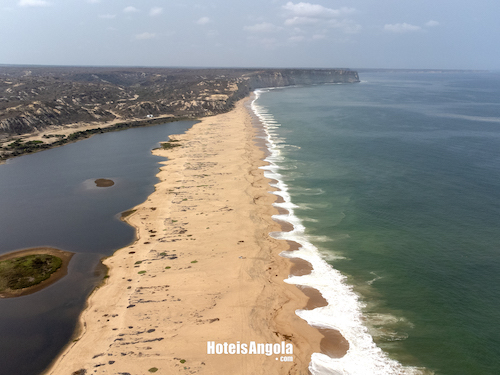
Located approximately 220 kilometers south of Luanda, this region marks the natural border between the municipality of Quiçama and the province of Cuanza Sul, close to the city of Porto Amboim.
The site is characterized by a vast estuary, where the fresh waters of the Longa River meet the Atlantic Ocean, creating an ecosystem of great ecological importance. The river mouth is protected by an extensive sandbar, which acts as a natural barrier and contributes to the formation of mangroves, small lagoons, and calm water channels.
In addition to its scenic richness, the Mouth of the Longa River is home to a great diversity of fauna and flora, serving as a habitat for various species of water birds, fish, and other organisms adapted to estuarine environments.
Mangroves also play a fundamental role in protecting the coastline against erosion and maintaining the environmental balance of the region.
The calm waters and the site's untamed beauty make it ideal for activities such as boat trips, birdwatching, recreational fishing, nature photography, and sustainable tourism.
The environment, still largely untouched by mass tourism, provides visitors with an authentic experience of contact with nature, marked by the serenity and charm of Angola's coastal landscapes.
The Mouth of the Longa River therefore represents an important natural heritage site of Angola, bringing together exceptional conditions for the development of ecotourism.
The appreciation and preservation of this ecosystem can contribute not only to the conservation of biodiversity but also to the promotion of the economic development of local communities through responsible tourism practices.
In addition to its scenic richness, the Mouth of the Longa River is home to a great diversity of fauna and flora, serving as a habitat for various species of water birds, fish, and other organisms adapted to estuarine environments.
Mangroves also play a fundamental role in protecting the coastline against erosion and maintaining the environmental balance of the region.
The calm waters and the site's untamed beauty make it ideal for activities such as boat trips, birdwatching, recreational fishing, nature photography, and sustainable tourism.
The environment, still largely untouched by mass tourism, provides visitors with an authentic experience of contact with nature, marked by the serenity and charm of Angola's coastal landscapes.
The Mouth of the Longa River therefore represents an important natural heritage site of Angola, bringing together exceptional conditions for the development of ecotourism.
The appreciation and preservation of this ecosystem can contribute not only to the conservation of biodiversity but also to the promotion of the economic development of local communities through responsible tourism practices.
Fronteira entre Kuanza Sul e Quiçama, Dembo Chio, Angola
Map
Alojamento
Cuanza-Sul surrounding area
- from kz 49,000Emirais Hotel Spa
- from kz 59,910Hotel Kalunda
- from kz 46,800Hotel Ritz Sumbe
- from kz 27,000Hotel Ritz Waku-Kungo
- from kz 24,000Hotel Aanisa Ritz
- from kz 25,000Hotel Fazenda Cabuta
Support Line
 WhatsApp
 Telephone
 Email
Email
Available every day from 8:00 AM to 10:00 PM. Allows you to clarify doubts, support reservations, and guide you in choosing the best accommodation and tourist services.