- Hotels
- Rent-A-Car
- Routs
Massangano Fort
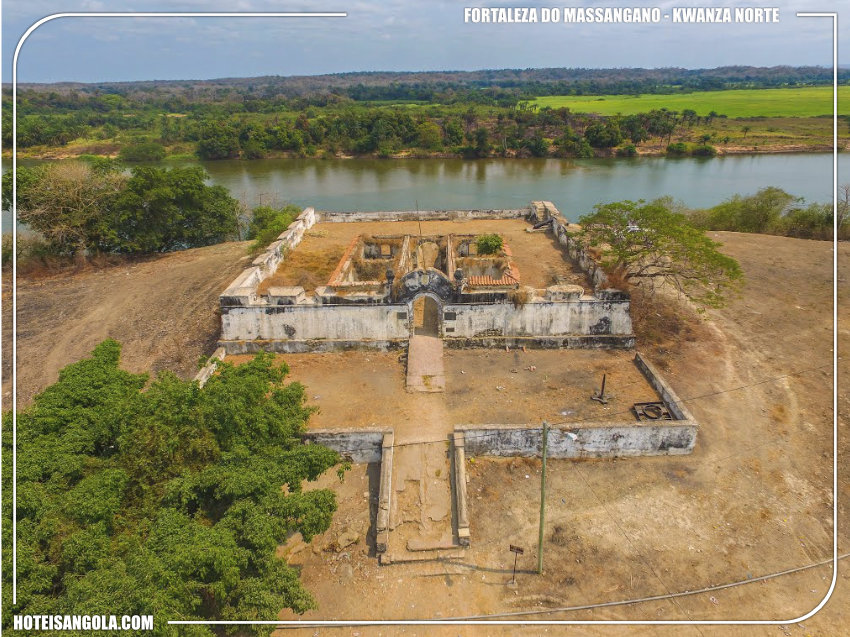
The Fortress of Our Lady of Victory de Massangano, popularly known as or Massangano Fort, is located in the village of Massangano, in Cambambe, Kwanza-Norte
History:
In 1580, the Battle of Massangano took place here, in which the Portuguese forces defeated those of King Kiluange of Ngola. Later, in 1582, Portuguese forces, under the command of Captain Paulo Dias de Novais, were repelled by the Ngola, when they tried to penetrate the region, in search of the legendary silver mines.
This fortification was built by Novais himself (or by Manuel Cerveira Pereira, according to other authors), on the banks of the Cuanza River, in 1583, with the function of defending the prison (military colonization establishment) that ensured Portuguese occupation in the region, expanding -a.
In addition to marking the Portuguese military presence, this establishment guaranteed the integrity of commercial networks, including the slave trade to the American continent.
Later, in 1640, Queen Nzinga's forces attacked the Massangano Fort, when her two sisters, Cambu and Fungi, were imprisoned, the latter being executed.
Faced with the occupation of Luanda by the forces of the Dutch Company of West Indies, in August 1641, it was in Massangano that the Portuguese forces retreated and where they resisted until the reconquest, by Salvador Correia de Sá e Benevides, in August 1648.
In Massangano, the person involved in the Inconfidência Mineira, José Álvares Maciel, was also detained in the 1790s, and was released there to fight for his own survival.
Until the mid-19th century, the prison and its garrison were governed by a chief captain.
Some buildings and the ruins of Massangano were classified as National Monuments by Provincial Decree No. 81, of April 28, 1923. They are currently in the hands of the State, assigned to the Ministry of Culture.
Features:
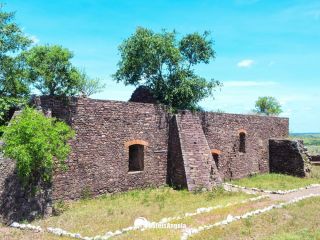
The fort has a square plan, without bastions at the apexes. In its walls there are ten embrasures.
It is accessed by a vaulted tunnel from the gun gate, on the side facing land. On its embankment stand the service buildings: Command House and Troop Barracks.
In 1580, the Battle of Massangano took place here, in which the Portuguese forces defeated those of King Kiluange of Ngola. Later, in 1582, Portuguese forces, under the command of Captain Paulo Dias de Novais, were repelled by the Ngola, when they tried to penetrate the region, in search of the legendary silver mines.
This fortification was built by Novais himself (or by Manuel Cerveira Pereira, according to other authors), on the banks of the Cuanza River, in 1583, with the function of defending the prison (military colonization establishment) that ensured Portuguese occupation in the region, expanding -a.
In addition to marking the Portuguese military presence, this establishment guaranteed the integrity of commercial networks, including the slave trade to the American continent.
Later, in 1640, Queen Nzinga's forces attacked the Massangano Fort, when her two sisters, Cambu and Fungi, were imprisoned, the latter being executed.
Faced with the occupation of Luanda by the forces of the Dutch Company of West Indies, in August 1641, it was in Massangano that the Portuguese forces retreated and where they resisted until the reconquest, by Salvador Correia de Sá e Benevides, in August 1648.
In Massangano, the person involved in the Inconfidência Mineira, José Álvares Maciel, was also detained in the 1790s, and was released there to fight for his own survival.
Until the mid-19th century, the prison and its garrison were governed by a chief captain.
Some buildings and the ruins of Massangano were classified as National Monuments by Provincial Decree No. 81, of April 28, 1923. They are currently in the hands of the State, assigned to the Ministry of Culture.
Features:
The fort has a square plan, without bastions at the apexes. In its walls there are ten embrasures.
It is accessed by a vaulted tunnel from the gun gate, on the side facing land. On its embankment stand the service buildings: Command House and Troop Barracks.
Massangano, Cambambe, Angola
Localização
- Localiddae: Massangano
- Municipio: Cambambe
- Provincia: Cuanza Norte
- Coordenadas GPS: -9.62935759433056, 14.256393570494827
Map
Accommodation
Cuanza-Norte surrounding area
- from kz 75,000Hotel Terminus N`Dalatando
Support Line
 WhatsApp
 Telephone
 Email
Email
Available every day from 8:00 AM to 10:00 PM. Allows you to clarify doubts, support reservations, and guide you in choosing the best accommodation and tourist services.
Previous article
Massangano Slave Square