- Hotels
- Rent-A-Car
- Routs
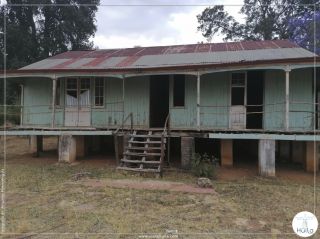
Boer Cemetery

It is characterized by a cemetery where we can find a Bóere style pyramid as well as graves with dates that indicate approximately the time in which the Bórere people lived in the Humpata region.
The Travelers of Thirst: The Forgotten History of the Boers in Southern Angola
In the heart of southern Angola, beyond the breathtaking landscapes of Huíla, lies a unique and little-told story: that of a community of Boers, descendants of European settlers from South Africa, who sought refuge here and left an unexpected and lasting mark. For the traveler seeking more than just beaches and wishing to delve into the depths of Angolan history, following in the footsteps of these migrants reveals a fascinating chapter of the complex interactions that shaped this nation.The “Journey of Thirst”: An Epic Migration to Angola
It all began at the end of the 19th century, with a series of migrations known as the “Dorsland Trek” or the “Journey of Thirst.” Driven by a deep desire for autonomy and fleeing British administration in South Africa, groups of Boers—a people of Dutch, German, and French origin, with an identity forged by the land and Calvinist faith—set out on a grueling journey in search of a new homeland. Their crossing of the unforgiving Kalahari Desert was a true odyssey, marked by the loss of lives and livestock due to lack of water and disease. In 1879, the survivors crossed the Cunene River and finally arrived in Angola. After negotiations with the Portuguese colonial authorities, they settled on the Huíla Plateau, founding their main colony in Humpata in 1881. This region, with its fertile lands, became the epicenter of a community that, while seeking isolation to preserve its culture, would ultimately transform the local economy.The Legacy of the “Boer Wagon”: A Revolution in Transport and Trade
Despite being viewed with suspicion by the Portuguese authorities, who considered them “idle” and resistant to integration, the Boers introduced an innovation that revolutionized southern Angola: the “Boer wagon.” This sturdy wooden cart, pulled by oxen, became the main means of transporting goods before the arrival of trains and trucks. Capable of carving its own paths through difficult terrain, the Boer wagon was fundamental in opening up the country’s interior. The Boers not only built and repaired roads between Moçâmedes, Benguela, and the plateau, but also boosted the lucrative trade in rubber and wax, transporting goods between the coast and the remote lands of Bié and Moxico. Even today, when traveling through the rural areas of the south, it is possible to see ox-drawn carts—living remnants of this legacy—transporting people and harvests to local markets.Complex Relations and the Beginning of the End
Life in Angola, however, was not the utopia they sought. Their relationship with the Portuguese administration was marked by constant friction over taxes, language, and education. The Boers resisted assimilation, preferring to maintain their own schools and leadership structures, which generated mutual distrust. Coexistence with indigenous populations was also, at times, conflictual, marked by disputes over land and cattle. This cultural isolation and resistance to modernization, while preserving their identity, ultimately led to impoverishment and a sense of stagnation. The feeling that “there is no future for us here” began to grow, preparing the ground for their departure.The Exoduses and the Traces of a Lost Community
The decline of the Boer presence materialized in two major exoduses. The first, in 1928, saw about 80% of the community “repatriated” to South West Africa (present-day Namibia), in an operation organized by the South African government. The reasons were a mix of dissatisfaction with conditions in Angola and external political factors. The final blow came in 1958. With the “winds of change” blowing across Africa and fears of the imminent war for independence in Angola, most of the remaining Boers decided to leave. The community, already aging and diminished, ceased to exist as a cohesive entity, and the last individuals departed in 1975, with the country’s independence.Today, for the attentive visitor, the passage of the Boers through Angola has not been completely erased. The old Boer cemetery in Humpata is a silent and moving testament to their presence. Names for oxen of Afrikaans origin still used in the region and the irrigation channels they built in the Serra da Chela are other marks of their passage. Their history is now a reminder of the fascinating and complex tapestry of cultures and migrations that make Angola such a diverse and rich destination.
By: Artur Alves
Humpata , Chiange, Huíla, Angola
Características
- Classificação: B
- Tipo de Acesso: Boa estrada
- Horário Limitado: Yes
- Horário: Das 7 horas às 17 horas
- Recomendado a Crianças: Yes
- Grau dificuldade física: Facil
Localização
- Distância sede Municipio: 0,5 KM, da Antiga Administração até ao Cemitério
- Localiddae: Chiange
- Municipio: Humpata
- Provincia: Huíla
- Coordenadas GPS: -15.684099339820683, 13.91956268751547
Povos
- Povos Locais: Nhaneka (Muila)
- Dialectos: Olunhaneka
Map
Accommodation
Huíla surrounding area
- from kz 105,000Hotel Serra da Chela
- from kz 60,000Kimbo do soba
- from kz 101,440Pululukwa Resort
- from kz 35,000Hospedaria S&I Freitas
- from kz 52,500Hotel Vip Huila
- from kz 60,000Hotel Chik Chik Lubango
- from kz 42,265Zoom`s Lodge
- from kz 60,000Vila Mara Flats
- from kz 55,000Hotel Yona Lubango
- from kz 22,500Pousada de Quilengues
- from kz 105,000Mumba Lodge
- from kz 40,000Mask Hotel
- from kz 33,000Huíla Park Residence
Support Line
 WhatsApp
 Telephone
 Email
Email
Available every day from 8:00 AM to 10:00 PM. Allows you to clarify doubts, support reservations, and guide you in choosing the best accommodation and tourist services.