- Hotels
- Rent-A-Car
- Routs
Our Lady of Fátima´s Sanctuary
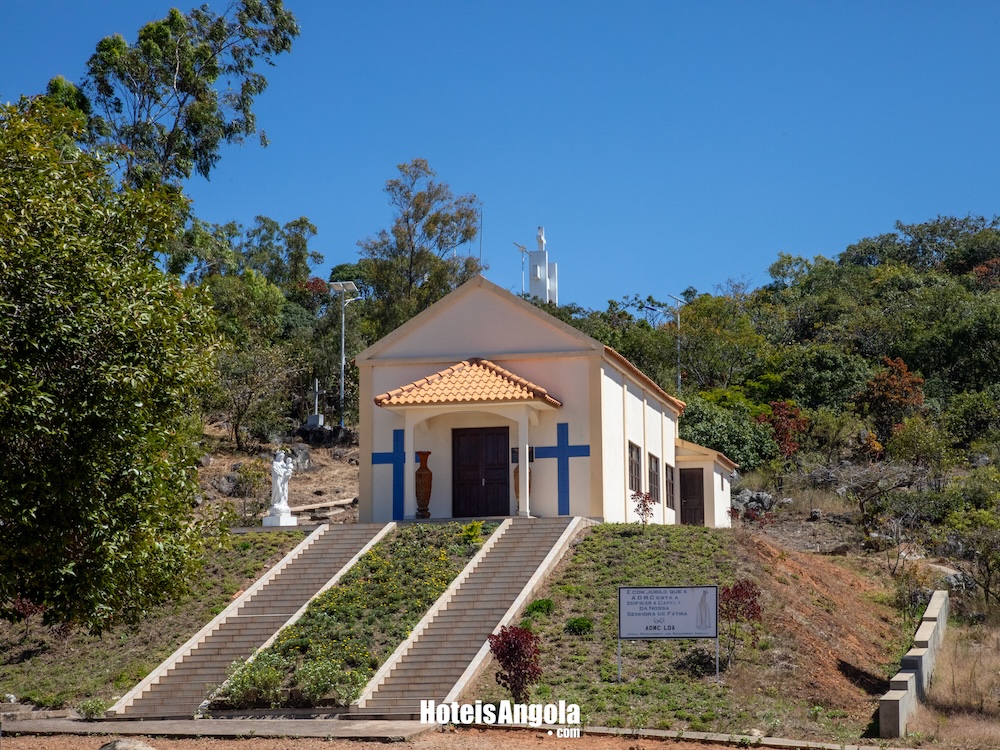
It is one of the most important centers of religious pilgrimage in the interior of Angola and a place of profound spiritual and cultural significance.
Located in the municipality of Chinguar, in the province of Bié, it is one of the most important centres of religious pilgrimage in the interior of Angola and a place of profound spiritual and cultural significance.
It began with a simple little chapel which, for a long time, let us say, was for the people of Bié a symbol of tourism and faith in the Virgin Mary.
Over time, the chapel deteriorated and, in order to rehabilitate it, a group of dedicated devotees of the Morro festival has been raising funds.
Situated on Mount Tchimbango, in an elevated area with broad views over the surrounding landscape, this sanctuary stands out not only for its religious significance, but also for its natural surroundings, which provide a unique experience of tranquillity, contemplation and connection with the land.
Its origins date back to the 1940s, being connected to the Catholic mission in the region and to the devotion to Our Lady of Fátima. The foundation stone was laid in 1942 and it was blessed on 19 March 1943. Integrated into the Chinguar Mission, the site has since become a meeting point for thousands of faithful who, year after year, take part in pilgrimages, vigils and religious celebrations, making Chinguar a true symbol of faith in the centre of the country.
More than just a religious destination, the Chinguar Sanctuary has considerable tourism potential, combining spirituality, history and nature in a single setting. Its privileged location and surrounding environment make this site an excellent opportunity for the development of experiences related to religious, cultural and nature tourism.
For those seeking to discover Angola beyond the traditional tourist circuits, Chinguar represents a must-see stop, a place where faith, landscape and local identity intersect in an authentic way. Visiting the Chinguar Sanctuary is, above all, an experience of discovery, not only of the territory, but also of its stories, its people and its traditions.
Chinguar, Kuito, Angola
Localização
- Localiddae: Chinguar
- Municipio: Kuito
- Provincia: Bié
- Coordenadas GPS: -12.593997458307697,16.33336788748889
Map
Accommodation
Bié surrounding area
- 8.4 3 reviews from kz 19,500Residencial Solar do Kuito
- 0.0 0 reviews from kz 25,806AGP Palace
- 0.0 0 reviews from kz 27,000Hotel Quinta da Terrincha
- 0.0 0 reviews from kz 85,000Hotel Chik Chik Bie
Support Line
 WhatsApp
 Telephone
 Email
Available every day from 8:00 AM to 10:00 PM. Allows you to clarify doubts, support reservations, and guide you in choosing the best accommodation and tourist services.