- Hotels
- Rent-A-Car
- Routs
Standard Point
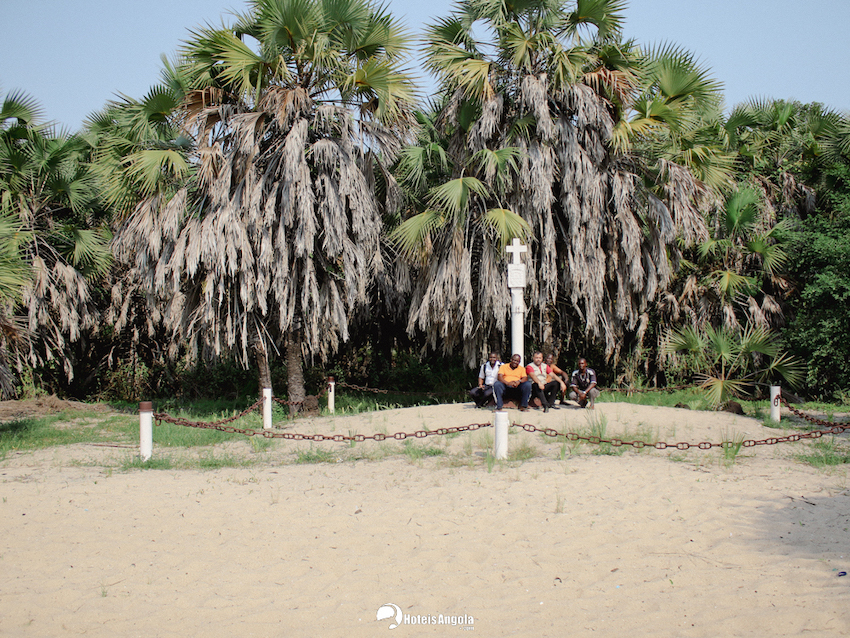
Standard Point is the beginning of a given action. Standard is a stone monument erected in places discovered by Portuguese navigators and explorers.
Ponta de Padrão is an island with a secular and vast history.
This island is located in the Northwest of the Municipality of Soyo, Province of Zaire .
It is an island well known for its magnificent history. During the reign of D. João II, the Portuguese arrived at the mouth of the Zaire River, under the command of Diogo Cão, in 1482, beginning the conquest of Angola.
The primary step was to create an alliance with the Kingdom of Congo, which the entire northern region of Angola was taken over.
In this way, the history of Ponta Padrão can be classified into three major historical periods, namely: Pre-colonial; Colonial and Contemporary.
PRE-COLONIAL ERA
Speaking of the point of standard in pre-colonial times, it lacks a clear history since history was lived traditionally.
And in a few words according to remote tradition, point of standard was a place of division between southern Africa and sub-Saharan Africa south of the equator.
And consequently, standard tip was called muan-a-nkukutu, because of the sea that provided many fish that occasionally many of them died and those that died generated the appearance of many animals called nkukutu.
It was also a region inhabited by a population that mostly lived from agriculture, hunting and artisanal fishing. The activity that was most practiced by them is artisanal fishing.
Pre-colonial times these lands did not know Christianity as they do today but did have a strong expression of traditional power (almighty God) Nzabi-ya-mpungo.
Divisions have another connotation:
1st Passage of caravels with the aim of finding lands different from the others;
2nd place to meet kings with traditional powers.
COLONIAL ERA
The tip of the pattern in colonial times has to do with the presence on April 23, 1482. The expeditions of the colonial government led by Captain-Major Chamado Diogo Cão arrived at the mouth of the great river for the first time with the caravan that accompanied him.
Where he erected the Standard that he named after Saint George.
According to the chronicler João de Barros, after the discovery of the coast of the mine, Dom João II ordered that instead of the wooden crosses, which until then were erected in the places where navigators were arriving, they “carry a standard the height of two states of man” (twice the height of a man).
The first to take them was Diogo Cão who placed one near the mouth of the great river, giving it the name São Jorge because he was a Saint of Great Devotion of the King. “in the era of the creation of the world of 6,881 of the birth of our Lord Jesus Christ of 1,482 Years, the very high, very excellent and prince el-king Dom João II ordered to discover these lands and set this pattern by Diogo Cão, squire of his house ”.
It is also important to remember that the name Padrão given to the river was given by the Portuguese because it was the beginning of everything or the first place where they set foot.
The natives gave it the name of Nzadi, the landmark called the pattern point had great political and religious significance:
1. Political because he justified the military presence of Diogo Cão with the aim of exploring new lands and in turn experiencing the two colonial phases which are:
a) Penetration and colonial occupation. The penetration is in the sense of creating live contacts of the inhabitants they found.
b) The occupation justified the liberation of the minds of the people found;
2. In the Religious aspect there is a letterhead in Latin which in Portuguese means the following: “in the era of the creation of the world of 6,881 of the birth of our Lord Jesus Christ of 1,482 Years, the very high, very excellent and prince el- King Dom João II ordered the discovery of these lands and the installation of this standard by Diogo Cão, squire of his house” (symbolized the year of Christ's birth).
Always with a religious aspect, his second expedition in the same, Its main objective was to bring Christianity for the first time in these lands of sub-Saharan Africa, since in pre-colonial times these lands did not know Christianity but rather had a strong expression of traditional power (almighty God) Nzabi-ya-mpungo.
But in addition, this place experienced many commercial circulations because of its entry with the name of nzadi (depth) and later became known as the saint of António do Zaire in 1489.
It served as a place of reunion between the Portuguese government and traditional kings.
CONTEMPORARY TIME
Speaking of the contemporary standard, it has become a historical place, a place of leisure, religious manifestation, political security, a Historic Place.
Looking in the past, this place was not venerated as it is today, our current history tells us that it is the birthplace of the mother of Jesus Christ, who is called Mary.
The physical position presents us with Mary's paw, which is also traditionally translated as the place of integration for all those who go there for the first time.
This integration is done with a symbolic gesture of the body that is dance accompanied with the modern drink that it's the wine.
There is usually always a guide or an elder on the island who tells us the past of the same place.
Localização
- Localiddae: Santo Antônio do Zaire
- Provincia: Zaire
- Coordenadas GPS: -6.077692394225669, 12.331444820884219
Video
Map
PRE-COLONIAL SEASON
Speaking of the standard tip in the pre-colonial era, it lacks a clear history since the history was lived traditionally. And in a nutshell according to remote tradition, tip of pattern was a place of division between southern Africa and sub-Saharan Africa south of the equator. And consequently, the pattern tip was called muan-a-nkukutu, because of the sea that supplied many fish that occasionally many of them died and of those that died generated the appearance of many animals named nkukutu.
It was also a region inhabited by a population that mostly lived on agriculture, hunting, artisanal fishing. The activity that was most practiced by them is artisanal fishing.
Pre-colonial times these lands did not know Christianity as they do today, but they did have a strong expression of traditional power (Almighty God) Nzabi-ya-mpungo.
Divisions have another connotation:
1st Pass caravels in order to find different lands of the other;
2nd Place of passage to meet the kings with traditional powers.
COLONIAL SEASON
Standard tip in the colonial period has to do with the presence on April 23, 1482. The expeditions of the colonial government headed by the captain-general called Diogo Cão with the caravan that accompanied him arrived for the first time at the mouth of the great river. Where he erected the Padrão that he named São Jorge.
According to the chronicler João de Barros, after the discovery of the coast of the mine, Dom João II ordered that instead of the wooden crosses, which up there where the navigators were arriving, “that they should carry a pattern of the height of two states of man ”(twice the stature of a man).
The first to take them was Diogo Cão who placed one near the mouth of the great river, giving it the name São Jorge for being the Saint of Great Devotion of El-rei. “In the era of the creation of the world of 6,881 of the birth of our Lord Jesus Christ of 1,482 Years, the very tall, very excellent and prince el-rei Dom João II had these lands discovered and put this pattern by Diogo Cão, squire of his house ”. It is also important to remember that the name Padrão given to the river, was put by the Portuguese because it was the beginning of everything or that is the first place where they stepped. The natives called him Nzadi. The landmark called pattern tip had great political and religious significance:
1. Political because it justified the military presence of Diogo Cão with the aim of exploring new lands and in turn experiencing the two colonial phases that are:
a) Colonial penetration and occupation. The penetration is in the sense of creating live contacts of the inhabitants found by them.
b) The occupation justified the liberation of the minds of the people found;
2. In the Religious aspect, the letters in Latin are stamped, which in Portuguese means the following: “in the era of the creation of the world of 6,881 of the birth of our Lord Jesus Christ of 1,482 Years, the very tall, very excellent and prince el- King Dom João II ordered these lands to be discovered and put this pattern by Diogo Cão, squire of his house ”(symbolized the year that is the birth of Christ). Always in the religious aspect, his second expedition there was, with the main objective of taking Christianity for the first time in these lands of sub-Saharan Africa, since in the pre-colonial times these lands did not know Christianity but had a strong expression of traditional power ( Almighty God) Nzabi-ya-mpungo.
But in addition, this place had many mercantile circulations because of its entry with the name of nzadi (depth).
It served as a meeting place between the Portuguese government and the traditional kings.
CONTEMPORARY SEASON
Speaking of the standard edge at the same time, it has become a historic place, a place of leisure, of religious manifestation, of political security.
A Historic Place
Looking in the past, this place was not venerated as it is today, our current history tells us that the tip of the pattern is the cradle of the mother of Jesus Christ called Mary.
The physical position presented to us by Maria's paw is also traditionally translated the place of integration for all those who go there for the 1st time. This integration is done with a symbolic gesture of the body which is the dance accompanied by the modern drink which is wine. There is usually a guide or elder on the island who tells us the past of the same place.
