- Hotels
- Rent-A-Car
- Routs
Quilombo Botanical Center
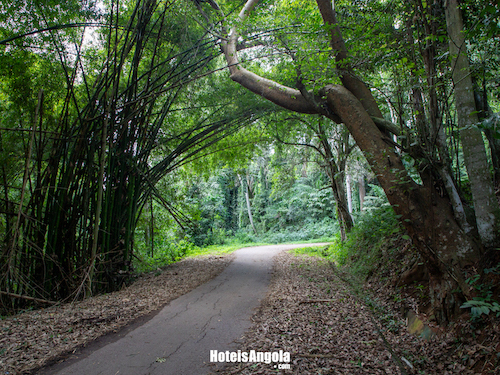
The Quilombo Botanical Center, considered, between the 70s and 80s, one of the best in the country for the diversity of plants and animals, continues to carry out research, testing, crossing and adapting varieties of seeds and plants.
The adaptation of plant varieties is essentially based on the emblematic porcelain rose, ginger and various vegetables, while seeds are the most used in agriculture in the region, such as corn, beans, peanuts, cassava, sweet potatoes and reindeer, among others.
The Quilombo Botanical Center also has greenhouses for the production of seedlings, a park of machines and a water reservoir to supply the research fields.
It is one of the few areas in the country that to date has been used for the reproduction of ornamental plants on the verge of extinction, such as the royal palm, Adam's rib and Christmas pine.
In Quilombo, we also find a wide variety of climbing plants of all species and sizes.
The porcelain rose, produced in an area of one hectare, is the largest emblem of the center that has received special attention from the workers who They take care of the place.
In the center, there are also different fruits, such as starfruit, cherry, mango, strawberry, sape-sape, guava, blackberry, gajajas, jackfruit and many others.
The famous mulembeiras are other attractions for visitors.
The flow of the Muembeje River allowed the construction of the famous Chinese Bridge, which is one of the oldest relics in the province, where, further down the river stream, you will find the falls rapids of the Muembeje, the river that bathes the epicenter of the place.
The Quilombo Botanical Center also has greenhouses for the production of seedlings, a park of machines and a water reservoir to supply the research fields.
It is one of the few areas in the country that to date has been used for the reproduction of ornamental plants on the verge of extinction, such as the royal palm, Adam's rib and Christmas pine.
In Quilombo, we also find a wide variety of climbing plants of all species and sizes.
The porcelain rose, produced in an area of one hectare, is the largest emblem of the center that has received special attention from the workers who They take care of the place.
In the center, there are also different fruits, such as starfruit, cherry, mango, strawberry, sape-sape, guava, blackberry, gajajas, jackfruit and many others.
The famous mulembeiras are other attractions for visitors.
The flow of the Muembeje River allowed the construction of the famous Chinese Bridge, which is one of the oldest relics in the province, where, further down the river stream, you will find the falls rapids of the Muembeje, the river that bathes the epicenter of the place.
Quilombo, N'dalatando, Angola
Localização
- Localiddae: Quilombo
- Municipio: N´dalatando
- Provincia: Cuanza Norte
- Coordenadas GPS: -9.333473739802079, 14.899354214986749
Map
Accommodation
Cuanza-Norte surrounding area
- from kz 75,000Hotel Terminus N`Dalatando
Support Line
 WhatsApp
 Telephone
 Email
Email
Available every day from 8:00 AM to 10:00 PM. Allows you to clarify doubts, support reservations, and guide you in choosing the best accommodation and tourist services.