- Hotels
- Rent-A-Car
- Routs
Moco Hill
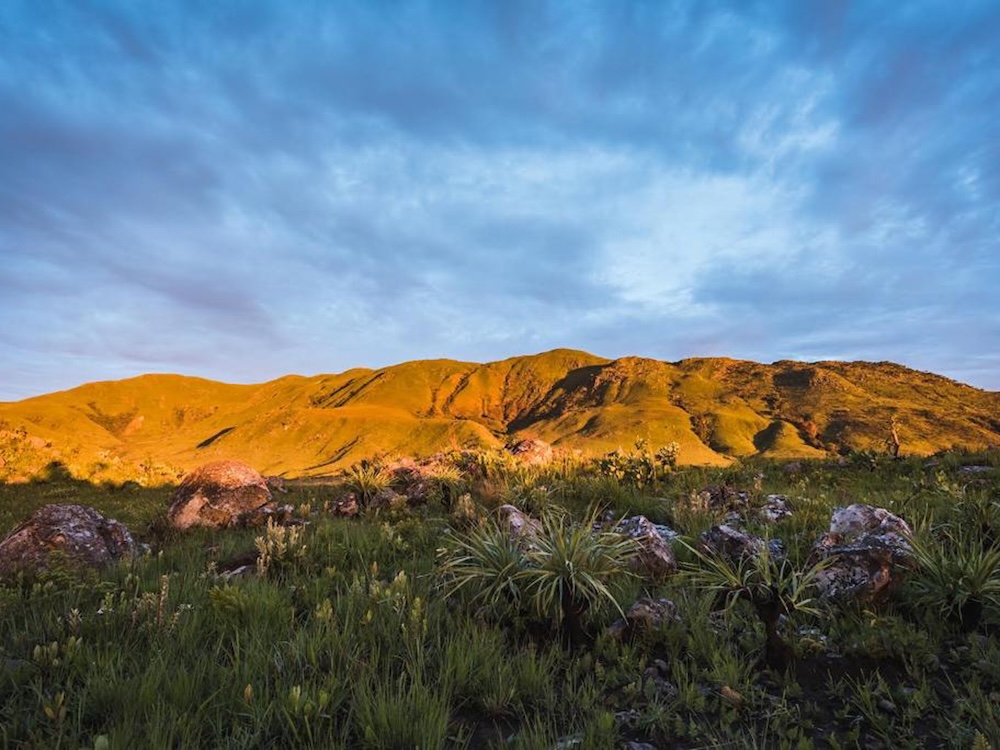
Moco Hill is the highest point in Angola, with an altitude of 2.620 meters, located in the province of Huambo, between the municipalities of Ecunha and Londuimbali.
Geography and Ecosystem
This mountain is part of the Angolan Central Plateau and stands out for its topographic prominence of 1,510 metres.The slopes of this mountain are covered by Afromontane forests, which form part of Angola's montane forest and savanna mosaic.
Biodiversity
Mount Moco is a site of great importance for the conservation of Angolan birdlife, hosting around 233 bird species.Among them are endemic and threatened species such as Swierstra's Francolin (Pternistis swierstrai), the Angolan Slaty Flycatcher (Dioptrornis brunneus) and Ludwig's Sunbird (Cinnyris ludovicensis).
Tourism and Access
Due to its biodiversity and spectacular views, it has become a popular destination for hiking, birdwatching, abseiling and paragliding.The ascent to the summit can be completed in approximately 2.5 to 3 hours, starting from the village of Kanjonde.
It is important to obtain permission from the local soba before climbing, as the mountain is considered a sacred site by the community.
Conservation
Despite its ecological importance, Mount Moco faces threats due to unsustainable wood collection and uncontrolled fires.Currently, it does not have official protected status, but initiatives such as the Mount Moco Project work to promote the conservation of the area and educate the local community about sustainable practices.
Legend:
‘’Legend has it that, one day, a man from a nearby village went out hunting.When he returned home, he realised that he had forgotten his knife in the bush.
He then asked other hunters to help him retrieve his tool, and they all set off together.
Night fell over the mist-covered mountains, the hours passed and passed, dawn came and went, and the hunters never returned.’’
This episode became a myth and gave the mountain its name, which came to be known as the place where the men who were looking for “omoco” (knife in Umbundu language) were lost.
Entre: Ecunha e Londuimbali., Angola
Localização
- Provincia: Huambo
- Coordenadas GPS: -12.461944373761359,15.176666258482014
Map
Accommodation
Huambo surrounding area
- from kz 44,850Hotel Ekuikui I
- Hotel Roma Ritz
- Hospedaria Engrácia & Filhos
- from kz 39,000A Residencies
Support Line
 WhatsApp
 Telephone
 Email
Email
Available every day from 8:00 AM to 10:00 PM. Allows you to clarify doubts, support reservations, and guide you in choosing the best accommodation and tourist services.