- Hotels
- Rent-A-Car
- Routs
Cathedral of Our Lady of Fátima - Menongue
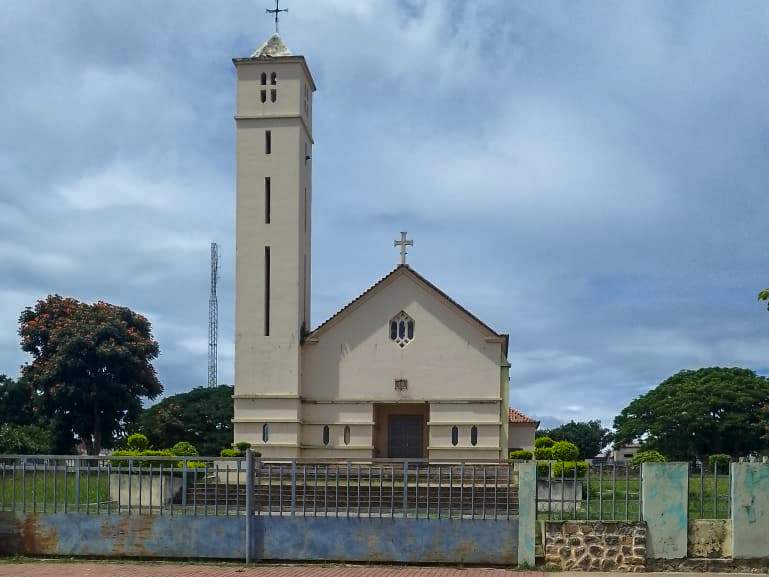
More than a temple of worship, the cathedral represents an important historical, cultural and community reference point in the city.
Located in the center of the city of Menongue, the Cathedral of Our Lady of Fátima is one of the main religious and social landmarks of the capital of Cuando Cubango province. More than a place of worship, the cathedral represents an important historical, cultural, and community reference point in the city.
Built in the 1950s, the church gained greater prominence in 1975, when it was elevated to cathedral status with the creation of the then Diocese of Serpa Pinto, later renamed the Diocese of Menongue. Since then, the Cathedral has become the center of Catholic religious life in the region, hosting celebrations, liturgical events, and significant moments in community life.
Its architecture is simple and functional, characteristic of 20th-century missionary churches in Angola. The building stands out for the sobriety of its lines, its spacious central nave, and its atmosphere of reflection, highlighting the importance of the space not through aesthetic grandeur, but through its spiritual and social role.
For visitors, the Cathedral of Our Lady of Fátima offers an opportunity to connect with the religious and human dimension of Menongue, allowing a better understanding of the relationship between faith, history, and everyday local life. Integrated into a walk through the city center, the cathedral complements other urban points of interest and contributes to a more complete understanding of the territory’s identity.
Built in the 1950s, the church gained greater prominence in 1975, when it was elevated to cathedral status with the creation of the then Diocese of Serpa Pinto, later renamed the Diocese of Menongue. Since then, the Cathedral has become the center of Catholic religious life in the region, hosting celebrations, liturgical events, and significant moments in community life.
Its architecture is simple and functional, characteristic of 20th-century missionary churches in Angola. The building stands out for the sobriety of its lines, its spacious central nave, and its atmosphere of reflection, highlighting the importance of the space not through aesthetic grandeur, but through its spiritual and social role.
For visitors, the Cathedral of Our Lady of Fátima offers an opportunity to connect with the religious and human dimension of Menongue, allowing a better understanding of the relationship between faith, history, and everyday local life. Integrated into a walk through the city center, the cathedral complements other urban points of interest and contributes to a more complete understanding of the territory’s identity.
Menongue, Cubango, Angola
Map
Accommodation
Cubango surrounding area
- from kz 33,000Rio Cuebe Lodge
- from kz 40,000Hotel Ritz Laúca
- from kz 28,500Hotel Ritz Cuchi
Support Line
 WhatsApp
 Telephone
 Email
Email
Available every day from 8:00 AM to 10:00 PM. Allows you to clarify doubts, support reservations, and guide you in choosing the best accommodation and tourist services.